



- Afhalen na 1 uur in een winkel met voorraad
- In januari gratis thuislevering in België
- Ruim aanbod met 7 miljoen producten
- Afhalen na 1 uur in een winkel met voorraad
- In januari gratis thuislevering in België
- Ruim aanbod met 7 miljoen producten





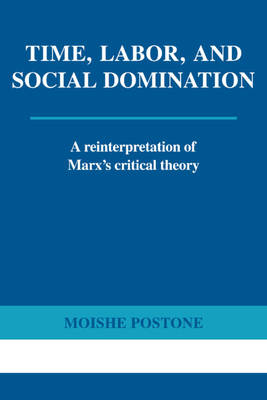
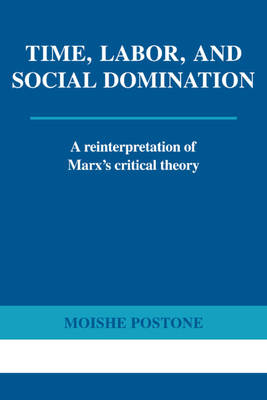
Time, Labor, and Social Domination
A Reinterpretation of Marx's Critical Theory
Moishe Postone, Louis Galambos
Paperback | Engels
€ 53,45
+ 106 punten
Omschrijving
In this ambitious book, Moishe Postone undertakes a fundamental reinterpretation of Marx's mature critical theory. He calls into question many of the presuppositions of traditional Marxist analyses and offers new interpretations of Marx's central arguments. These interpretations lead him to a very different analysis of the nature and problems of capitalism and provide the basis for a critique of "actually existing socialism." According to this new interpretation, Marx identifies the central core of the capitalist system with an impersonal form of social domination generated by labor itself and not simply with market mechanisms and private property. Proletarian labor and the industrial production process are characterized as expressions of domination rather than as means of human emancipation. This reformulation relates the form of economic growth and the structure of social labor in modern society to the alienation and domination at the heart of capitalism. It provides the foundation for a critical social theory that is more adequate to late twentieth-century capitalism.
Specificaties
Betrokkenen
- Auteur(s):
- Uitgeverij:
Inhoud
- Aantal bladzijden:
- 440
- Taal:
- Engels
Eigenschappen
- Productcode (EAN):
- 9780521565400
- Verschijningsdatum:
- 13/07/1996
- Uitvoering:
- Paperback
- Formaat:
- Trade paperback (VS)
- Afmetingen:
- 154 mm x 228 mm
- Gewicht:
- 594 g


Alleen bij Standaard Boekhandel
+ 106 punten op je klantenkaart van Standaard Boekhandel
Cadeau

AANGERADEN


Beoordelingen
We publiceren alleen reviews die voldoen aan de voorwaarden voor reviews. Bekijk onze voorwaarden voor reviews.