


- Afhalen na 1 uur in een winkel met voorraad
- Gratis thuislevering in België vanaf € 30
- Ruim aanbod met 7 miljoen producten
- Afhalen na 1 uur in een winkel met voorraad
- Gratis thuislevering in België vanaf € 30
- Ruim aanbod met 7 miljoen producten





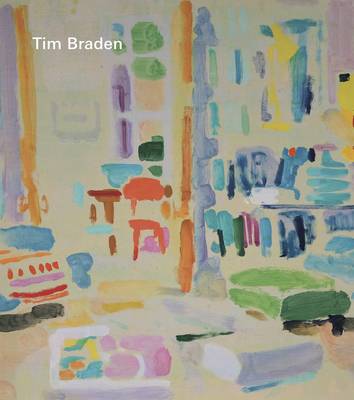
Tim Braden - I Can See All the Colours Now
Tim Braden, Thomas Marks, Matt Incledon, Jennifer Higgie, Dominic Molon
Hardcover | Engels
€ 90,45
+ 180 punten
Omschrijving
Explores color, form, and human presence across diverse subjects from artist Tim Braden.
Tim Braden's work sits at the meeting point of restlessness and order. His London studio mirrors this balance: serene white walls and clear worktables face shelves crammed with books, pinned postcards and sketches, racks of brushes and pigments, odd sculptures and suspended remnants of installations. That duality--calm structure alongside eclectic curiosity--animates his painting practice.
Across two decades, Braden has resisted linear progression. Within weeks he might move from fine ink drawings to rich oil interiors or expansive acrylic abstractions. His exhibitions are curated like group shows--varied yet unified by a refined command of color and the interplay between abstraction and figuration, each mode constantly informing the other.
Braden's subjects are equally diverse: mountains and interiors, books, posters, craftspeople and travellers, all rendered through a vivid and enquiring gaze. A formative visit to his cousin Patrick Heron's studio sparked his lifelong fascination with color; later influences, including Josef and Anni Albers and the Bauhaus legacy, deepened his engagement with craft, design, and teaching.
His landscapes--particularly mountains--form a language of peaks, lakes, and snow through which he explores structure, scale, and the subtleties of tone. Sometimes Western in perspective, sometimes aerial and Eastern in approach, they turn apparent emptiness, such as snow or sky, into delicate fields of chromatic activity. Human presence appears fleetingly--houses, figures, or traces of printed media--reminding us that perception is always mediated.
Braden's North African works, especially from Tangier and Algiers, question how artists look at the "exotic". He acknowledges the legacy of Orientalism by painting both the beauty and the filters through which it is seen, often embedding postcards or reproductions within his compositions. His working process preserves the immediacy of sketches even when scaled up, maintaining freshness and spontaneity.
A parallel thread, explored in Making is Thinking, celebrates the artistry of labor. Braden paints weavers, gardeners, and ceramicists--frequently women--paying homage to forms of making often dismissed as craft. He treats the act of creation as a shared human impulse, echoing Anni Albers' belief in listening to "what the materials want to do".
Whether depicting the studios of admired painters, domestic interiors, or his own home, Braden transforms rooms into quiet temples of color and reflection. His garden scenes likewise suggest care and contemplation in an overstimulated world. Even his travel works--real or imagined--translate distant times and places into present moments of luminous equilibrium. Restless yet disciplined, Braden's art embodies a profound, ongoing fascination with color, making, and seeing.
Tim Braden's work sits at the meeting point of restlessness and order. His London studio mirrors this balance: serene white walls and clear worktables face shelves crammed with books, pinned postcards and sketches, racks of brushes and pigments, odd sculptures and suspended remnants of installations. That duality--calm structure alongside eclectic curiosity--animates his painting practice.
Across two decades, Braden has resisted linear progression. Within weeks he might move from fine ink drawings to rich oil interiors or expansive acrylic abstractions. His exhibitions are curated like group shows--varied yet unified by a refined command of color and the interplay between abstraction and figuration, each mode constantly informing the other.
Braden's subjects are equally diverse: mountains and interiors, books, posters, craftspeople and travellers, all rendered through a vivid and enquiring gaze. A formative visit to his cousin Patrick Heron's studio sparked his lifelong fascination with color; later influences, including Josef and Anni Albers and the Bauhaus legacy, deepened his engagement with craft, design, and teaching.
His landscapes--particularly mountains--form a language of peaks, lakes, and snow through which he explores structure, scale, and the subtleties of tone. Sometimes Western in perspective, sometimes aerial and Eastern in approach, they turn apparent emptiness, such as snow or sky, into delicate fields of chromatic activity. Human presence appears fleetingly--houses, figures, or traces of printed media--reminding us that perception is always mediated.
Braden's North African works, especially from Tangier and Algiers, question how artists look at the "exotic". He acknowledges the legacy of Orientalism by painting both the beauty and the filters through which it is seen, often embedding postcards or reproductions within his compositions. His working process preserves the immediacy of sketches even when scaled up, maintaining freshness and spontaneity.
A parallel thread, explored in Making is Thinking, celebrates the artistry of labor. Braden paints weavers, gardeners, and ceramicists--frequently women--paying homage to forms of making often dismissed as craft. He treats the act of creation as a shared human impulse, echoing Anni Albers' belief in listening to "what the materials want to do".
Whether depicting the studios of admired painters, domestic interiors, or his own home, Braden transforms rooms into quiet temples of color and reflection. His garden scenes likewise suggest care and contemplation in an overstimulated world. Even his travel works--real or imagined--translate distant times and places into present moments of luminous equilibrium. Restless yet disciplined, Braden's art embodies a profound, ongoing fascination with color, making, and seeing.
Specificaties
Betrokkenen
- Auteur(s):
- Uitgeverij:
Inhoud
- Aantal bladzijden:
- 272
- Taal:
- Engels
Eigenschappen
- Productcode (EAN):
- 9781910221754
- Verschijningsdatum:
- 12/03/2026
- Uitvoering:
- Hardcover
- Formaat:
- Genaaid
- Afmetingen:
- 248 mm x 286 mm
- Gewicht:
- 1805 g


Alleen bij Standaard Boekhandel
+ 180 punten op je klantenkaart van Standaard Boekhandel
Cadeau

AANGERADEN


Beoordelingen
We publiceren alleen reviews die voldoen aan de voorwaarden voor reviews. Bekijk onze voorwaarden voor reviews.