


- Afhalen na 1 uur in een winkel met voorraad
- Gratis thuislevering in België vanaf € 30
- Ruim aanbod met 7 miljoen producten
- Afhalen na 1 uur in een winkel met voorraad
- Gratis thuislevering in België vanaf € 30
- Ruim aanbod met 7 miljoen producten





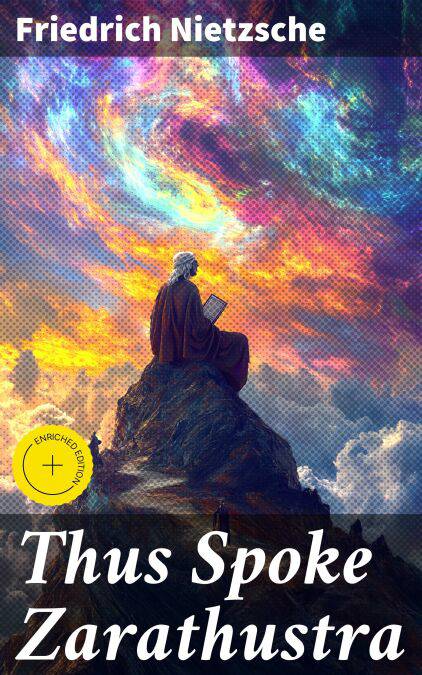
Thus Spoke Zarathustra E-BOOK
The Magnum Opus of the World's Most Influential Philosopher & Revolutionary Thinker
Friedrich Nietzsche
E-book | Engels
€ 1,99
+ 1 punten
Uitvoering
Omschrijving
In "Thus Spoke Zarathustra," Friedrich Nietzsche presents a profound philosophical narrative that intertwines poetry, prose, and prophetic discourse. The book follows the journey of Zarathustra, a sage who descends from the mountains to impart his wisdom on humanity. Through a series of parables and aphorisms, Nietzsche explores themes of the √úbermensch (Overman), the eternal recurrence, and the reevaluation of morality. The work is stylistically innovative, characterized by its lyrical language and rhetorical flourishes, challenging traditional philosophical conventions and reflecting the tumultuous intellectual landscape of the late 19th century. Nietzsche'Äôs text not only serves as a philosophical treatise but also as a critique of contemporary cultural and religious values, thereby establishing itself as a cornerstone of existential and modernist thought. Friedrich Nietzsche, a German philosopher known for his radical ideas and critique of religion, was deeply influenced by existential concerns and the perceived moral decay of society. His personal struggles with health and his fascination with ancient philosophical texts shaped his ideological framework. "Thus Spoke Zarathustra" emerged from Nietzsche'Äôs belief in the necessity of a new framework for understanding human existence, one that transcended conventional Christian morality and ventured into self-creation and individualism. This seminal work is highly recommended for readers interested in philosophy, literature, and the human condition. Nietzsche'Äôs eloquent prose and unsettling ideas provoke critical reflection and engage readers in a dialogue about the nature of existence and the potential for personal transformation. Its impact on 20th-century thought makes it an essential read for anyone seeking to understand contemporary existential philosophy.
Specificaties
Betrokkenen
- Auteur(s):
- Vertaler(s):
- Uitgeverij:
Inhoud
- Aantal bladzijden:
- 367
- Taal:
- Engels
Eigenschappen
- Productcode (EAN):
- 8596547678151
- Verschijningsdatum:
- 25/11/2023
- Uitvoering:
- E-book
- Beveiligd met:
- Digital watermarking
- Formaat:
- ePub


Alleen bij Standaard Boekhandel
+ 1 punten op je klantenkaart van Standaard Boekhandel

Beoordelingen
We publiceren alleen reviews die voldoen aan de voorwaarden voor reviews. Bekijk onze voorwaarden voor reviews.