


- Afhalen na 1 uur in een winkel met voorraad
- Gratis thuislevering in België vanaf € 30
- Ruim aanbod met 7 miljoen producten
- Afhalen na 1 uur in een winkel met voorraad
- Gratis thuislevering in België vanaf € 30
- Ruim aanbod met 7 miljoen producten





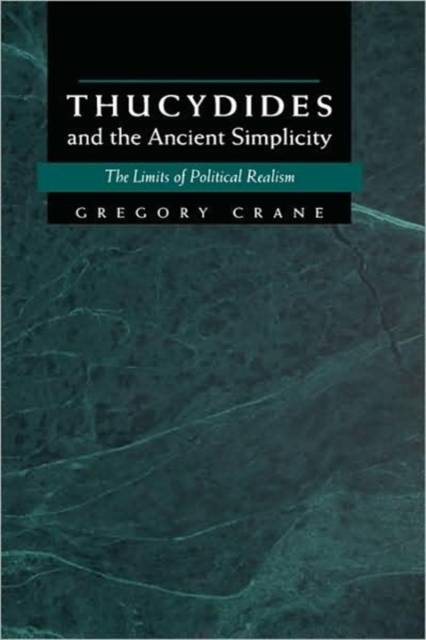
Thucydides and the Ancient Simplicity
The Limits of Political Realism
Gregory Crane
Hardcover | Engels
€ 106,95
+ 213 punten
Omschrijving
Thucydides' History of the Peloponnesian War is the earliest surviving realist text in the European tradition. As an account of the Peloponnesian War, it is famous both as an analysis of power politics and as a classic of political realism. From the opening speeches, Thucydides' Athenians emerge as a new and frightening source of power, motivated by self-interest and oblivious to the rules and shared values under which the Greeks had operated for centuries. Gregory Crane demonstrates how Thucydides' history brilliantly analyzes both the power and the dramatic weaknesses of realist thought.
The tragedy of Thucydides' history emerges from the ultimate failure of the Athenian project. The new morality of the imperialists proved as conflicted as the old; history shows that their values were unstable and self-destructive. Thucydides' history ends with the recounting of an intellectual stalemate that, a century later, motivated Plato's greatest work.
Thucydides and the Ancient Simplicity includes a thought-provoking discussion questioning currently held ideas of political realism and its limits. Crane's sophisticated claim for the continuing usefulness of the political examples of the classical past will appeal to anyone interested in the conflict between the exercise of political power and the preservation of human freedom and dignity.
The tragedy of Thucydides' history emerges from the ultimate failure of the Athenian project. The new morality of the imperialists proved as conflicted as the old; history shows that their values were unstable and self-destructive. Thucydides' history ends with the recounting of an intellectual stalemate that, a century later, motivated Plato's greatest work.
Thucydides and the Ancient Simplicity includes a thought-provoking discussion questioning currently held ideas of political realism and its limits. Crane's sophisticated claim for the continuing usefulness of the political examples of the classical past will appeal to anyone interested in the conflict between the exercise of political power and the preservation of human freedom and dignity.
Specificaties
Betrokkenen
- Auteur(s):
- Uitgeverij:
Inhoud
- Aantal bladzijden:
- 330
- Taal:
- Engels
Eigenschappen
- Productcode (EAN):
- 9780520207899
- Verschijningsdatum:
- 28/08/1998
- Uitvoering:
- Hardcover
- Formaat:
- Genaaid
- Afmetingen:
- 160 mm x 234 mm
- Gewicht:
- 671 g


Alleen bij Standaard Boekhandel
+ 213 punten op je klantenkaart van Standaard Boekhandel
Cadeau

AANGERADEN


Beoordelingen
We publiceren alleen reviews die voldoen aan de voorwaarden voor reviews. Bekijk onze voorwaarden voor reviews.