


- Afhalen na 1 uur in een winkel met voorraad
- Gratis thuislevering in België vanaf € 30
- Ruim aanbod met 7 miljoen producten
- Afhalen na 1 uur in een winkel met voorraad
- Gratis thuislevering in België vanaf € 30
- Ruim aanbod met 7 miljoen producten





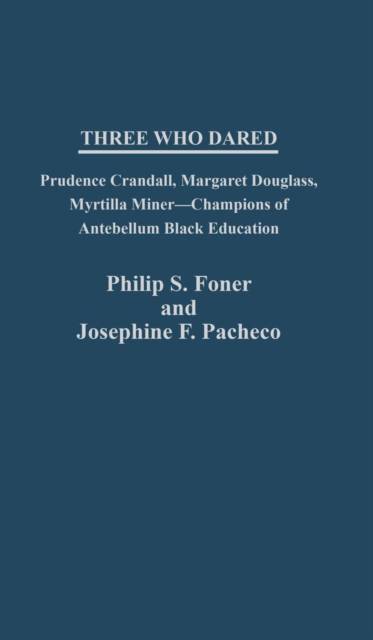
Three Who Dared
Prudence Crandall, Margaret Douglass, Myrtilla Miner--Champions of Antebellum Black Education
Philip S Foner, Josephin Pacheco, Elizabeth Vandepaer
€ 169,95
+ 339 punten
Eenvoudig bestellen
Veilig betalen


Gratis thuislevering vanaf € 30 (via bpost)
Gratis levering in je Standaard Boekhandel
Omschrijving
Against a pre-Civil War backdrop of violence and antagonism, three courageous women, in different parts of the country, undertook to teach black children. Prudence Crandall, Margaret Douglass, and Myrtilla Miner lived, respectively, in Connecticut, Virginia, and Washington, D.C.: they each found that racial prejudice is not limited by geography and that people will go to great lengths to prevent the teaching of blacks. Of the three schools they established, only one--in the nation's capitol--proved more or less permanent, but all three had a significant impact on American life. Because they chose to teach black children, Miner, Douglass, and Crandall all endured persecution and hardship. Foner and Pacheco's important biographical study portrays three women of unusual courage who deserve to take their places with the many brave women of nineteenth-century America.
Specificaties
Betrokkenen
- Auteur(s):
- Uitgeverij:
Inhoud
- Aantal bladzijden:
- 234
- Taal:
- Engels
- Reeks:
- Reeksnummer:
- nr. 47
Eigenschappen
- Productcode (EAN):
- 9780313235849
- Verschijningsdatum:
- 27/03/1984
- Uitvoering:
- Hardcover
- Formaat:
- Genaaid
- Afmetingen:
- 127 mm x 203 mm
- Gewicht:
- 376 g


Alleen bij Standaard Boekhandel
+ 339 punten op je klantenkaart van Standaard Boekhandel
CADEAU

AANGERADEN


Beoordelingen
We publiceren alleen reviews die voldoen aan de voorwaarden voor reviews. Bekijk onze voorwaarden voor reviews.