


- Afhalen na 1 uur in een winkel met voorraad
- Gratis thuislevering in België vanaf € 30
- Ruim aanbod met 7 miljoen producten
- Afhalen na 1 uur in een winkel met voorraad
- Gratis thuislevering in België vanaf € 30
- Ruim aanbod met 7 miljoen producten





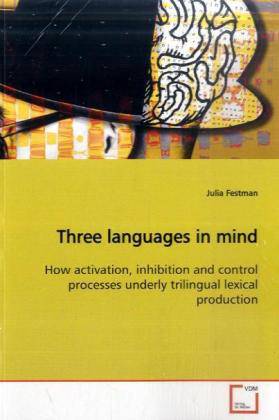
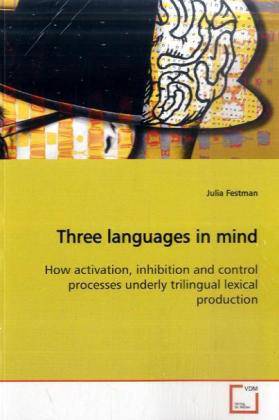
Three languages in mind
How activation, inhibition and control processes underly trilingual lexical production
Julia Festman
Paperback | Engels
€ 77,95
+ 155 punten
Omschrijving
How does a trilingual manage to speak only one from
among the three languages s/he masters? This
accessible book examines the psycholinguistic
underpinnings of trilingualism and describes the
mechanisms (activation, inhibition and
control) taken from cognitive psychology as well as
the impact of language proficiency and processing load.
Introductory chapters focus on the description of
trilinguals and trilingual processing. After
reviewing models of language production, the first
model for trilingualism is presented. Four stages of
language production (access, search, competition, and
selection) and a number of lexical phenomena are
examined in detail in four experimental studies with
different methodologies on spontaneous language
production in three languages. A language background
questionnaire is also included.
This book is especially useful for students and
researchers interested in psycholinguistics and its
methods, in multilingualism, and for all
multilinguals who always wanted to understand why
they sometimes say something in the wrong language.
among the three languages s/he masters? This
accessible book examines the psycholinguistic
underpinnings of trilingualism and describes the
mechanisms (activation, inhibition and
control) taken from cognitive psychology as well as
the impact of language proficiency and processing load.
Introductory chapters focus on the description of
trilinguals and trilingual processing. After
reviewing models of language production, the first
model for trilingualism is presented. Four stages of
language production (access, search, competition, and
selection) and a number of lexical phenomena are
examined in detail in four experimental studies with
different methodologies on spontaneous language
production in three languages. A language background
questionnaire is also included.
This book is especially useful for students and
researchers interested in psycholinguistics and its
methods, in multilingualism, and for all
multilinguals who always wanted to understand why
they sometimes say something in the wrong language.
Specificaties
Betrokkenen
- Auteur(s):
- Uitgeverij:
Inhoud
- Aantal bladzijden:
- 236
- Taal:
- Engels
Eigenschappen
- Productcode (EAN):
- 9783639146363
- Uitvoering:
- Paperback


Alleen bij Standaard Boekhandel
+ 155 punten op je klantenkaart van Standaard Boekhandel
AANGERADEN


Beoordelingen
We publiceren alleen reviews die voldoen aan de voorwaarden voor reviews. Bekijk onze voorwaarden voor reviews.