


- Afhalen na 1 uur in een winkel met voorraad
- Gratis thuislevering in België vanaf € 30
- Ruim aanbod met 7 miljoen producten
- Afhalen na 1 uur in een winkel met voorraad
- Gratis thuislevering in België vanaf € 30
- Ruim aanbod met 7 miljoen producten





€ 22,95
+ 45 punten
Uitvoering
Omschrijving
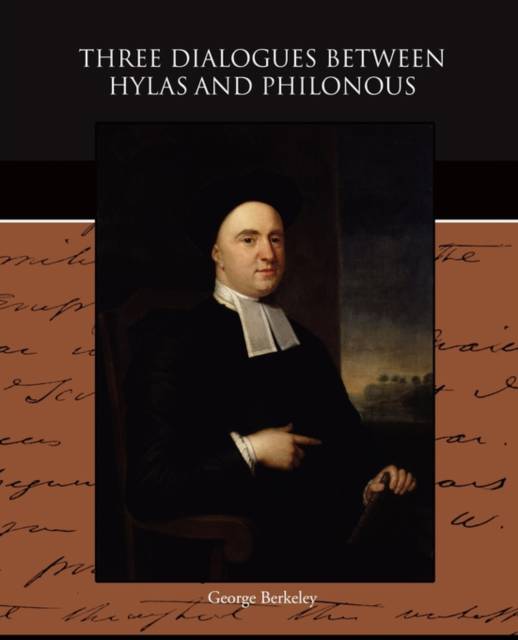
George Berkeley also known as Bishop Berkeley was an 18th century philosopher. His theory of "immaterialism" was later referred to as subjective idealism. This theory, summed up in his dictum, "Esse est percipi", states that individuals can only directly know sensation and ideas of objects not abstractions such as matter. Berkeley wrote A Treatise Concerning the Principles of Human Knowledge (1710) and Three Dialogues between Hylas and Philonous (1713). Berkeley used the characters of Philonous and Hylas to represent himself and John Locke. Three important concepts discussed in the Three Dialogues are perceptual relativity, the conceivability/master argument, and Berkeley's phenomenalism.
Specificaties
Betrokkenen
- Auteur(s):
- Uitgeverij:
Inhoud
- Aantal bladzijden:
- 140
- Taal:
- Engels
Eigenschappen
- Productcode (EAN):
- 9781438527710
- Verschijningsdatum:
- 8/10/2009
- Uitvoering:
- Paperback
- Formaat:
- Trade paperback (VS)
- Afmetingen:
- 190 mm x 235 mm
- Gewicht:
- 254 g


Alleen bij Standaard Boekhandel
+ 45 punten op je klantenkaart van Standaard Boekhandel
Cadeau

AANGERADEN


Beoordelingen
We publiceren alleen reviews die voldoen aan de voorwaarden voor reviews. Bekijk onze voorwaarden voor reviews.