


- Afhalen na 1 uur in een winkel met voorraad
- Gratis thuislevering in België vanaf € 30
- Ruim aanbod met 7 miljoen producten
- Afhalen na 1 uur in een winkel met voorraad
- Gratis thuislevering in België vanaf € 30
- Ruim aanbod met 7 miljoen producten





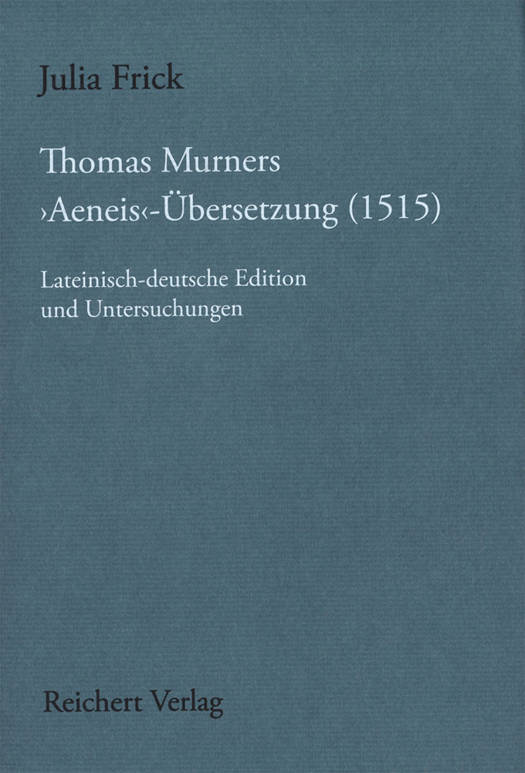
Thomas Murners 'Aeneis'-Übersetzung (1515)
Lateinisch-Deutsche Edition Und Untersuchungen
Julia Frick
€ 221,45
+ 442 punten
Omschrijving
The first ever German translation of Virgil's 'Aeneid' is that of the Franciscan, doctor of theology, jurist and poeta laureatus Thomas Murner (1475-1537). Its cultural and literary historical significance is documented on the one hand by its affiliation to the environment of the dedicatee, Emperor Maximilian I, and on the other hand by the deliberately staged humanist gesture of the author: Murner, according to the preface, "has refreshed Vergil's work from Latynschem todt in tütsches leben". The present work fulfils a longstanding desideratum - an edition of Murner's work. It offers the German 'Aeneid' in the historical mode of use intended by Murner: the German text is synoptically juxtaposed with Murner's Latin original. Because Murner's translation of the 'Aeneid' is one of the 'unread' texts of the early modern period, the studies take up a number of thematic segments that can point research in possible directions and pave the way.
Specificaties
Betrokkenen
- Auteur(s):
- Uitgeverij:
Inhoud
- Aantal bladzijden:
- 1533
- Taal:
- Duits
- Reeks:
Eigenschappen
- Productcode (EAN):
- 9783954903511
- Verschijningsdatum:
- 11/12/2019
- Uitvoering:
- Hardcover
- Formaat:
- Genaaid
- Afmetingen:
- 170 mm x 236 mm
- Gewicht:
- 2435 g



Alleen bij Standaard Boekhandel
+ 442 punten op je klantenkaart van Standaard Boekhandel
Cadeau

AANGERADEN


Beoordelingen
We publiceren alleen reviews die voldoen aan de voorwaarden voor reviews. Bekijk onze voorwaarden voor reviews.