



- Afhalen na 1 uur in een winkel met voorraad
- In januari gratis thuislevering in België
- Ruim aanbod met 7 miljoen producten
- Afhalen na 1 uur in een winkel met voorraad
- In januari gratis thuislevering in België
- Ruim aanbod met 7 miljoen producten





€ 39,00
+ 78 punten
Omschrijving
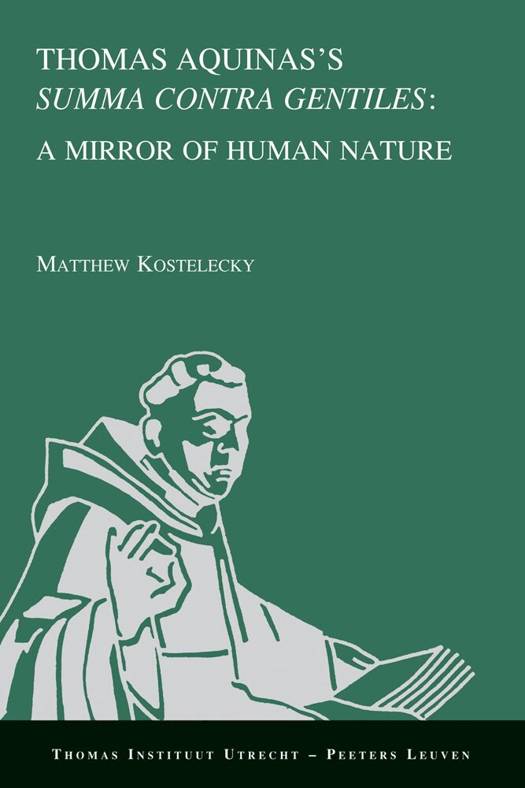
The Summa contra gentiles is perhaps the most peculiar work of St. Thomas Aquinas, due to Thomas's decision to structure the work first according to what humans can say about God without revelation and then what humans can say about God once revelation is explicitly introduced. Such an approach to the human pursuit of the divine is otherwise unheard of in Thomas's own day, and this unusual structure has provided a fertile seedbed for a wide range of interpretations. Matthew Kostelecky's book shows the integral relationship between the conceptions of human nature and God operative throughout the Summa contra gentiles such that the text is always in a twofold movement, at once describing what humans can say about God while also reflecting human nature back on itself by delineating its limits and capabilities with respect to the possible human knowledge of God. As a result, the Summa contra gentiles is presented as a mirror of human nature as that nature is directed to its most noble object.
Specificaties
Betrokkenen
- Auteur(s):
- Uitgeverij:
Inhoud
- Aantal bladzijden:
- 242
- Taal:
- Engels
- Reeks:
- Reeksnummer:
- nr. 14
Eigenschappen
- Productcode (EAN):
- 9789042927476
- Verschijningsdatum:
- 8/02/2013
- Uitvoering:
- Paperback
- Formaat:
- Trade paperback (VS)
- Afmetingen:
- 160 mm x 239 mm
- Gewicht:
- 408 g


Alleen bij Standaard Boekhandel
+ 78 punten op je klantenkaart van Standaard Boekhandel
Cadeau

AANGERADEN


Beoordelingen
We publiceren alleen reviews die voldoen aan de voorwaarden voor reviews. Bekijk onze voorwaarden voor reviews.