



Je cadeautjes zeker op tijd in huis hebben voor de feestdagen? Kom langs in onze winkels en vind het perfecte geschenk!
- Afhalen na 1 uur in een winkel met voorraad
- Gratis thuislevering in België vanaf € 30
- Ruim aanbod met 7 miljoen producten
Je cadeautjes zeker op tijd in huis hebben voor de feestdagen? Kom langs in onze winkels en vind het perfecte geschenk!
- Afhalen na 1 uur in een winkel met voorraad
- Gratis thuislevering in België vanaf € 30
- Ruim aanbod met 7 miljoen producten





Omschrijving
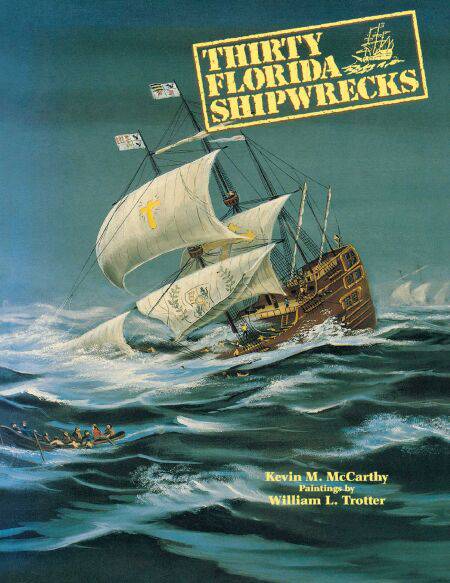
Sunken treasure, cannibalism, prison ships, Nazi submarines, the Bermuda triangle—all are tied into the lore of shipwrecks along Florida's coasts. There are as many shipwreck stories as there are thousands of Florida shipwrecks. This book offers thirty of the most interesting of them—from the tale of young Fontaneda, who wrecked in 1545 and was held captive by Indians for 17 years, to the story of the Coast Guard cutter Bibb, which was sunk off Key Largo in 1987 to provide an artificial reef and diving site. In between there is the Atocha, flagship of a Spanish treasure fleet, which sank in a hurricane in September 1622 and was found, along with its $100 million worth of gold and silver, by Mel Fisher in July of 1985.
Each shipwreck story has a map pinpointing its location and a full-color illustration by renowned artist William L. Trotter. There is an extensive bibliography and a foreword by Florida state underwater archaeologist Roger Smith.
Each shipwreck story has a map pinpointing its location and a full-color illustration by renowned artist William L. Trotter. There is an extensive bibliography and a foreword by Florida state underwater archaeologist Roger Smith.
Specificaties
Betrokkenen
- Auteur(s):
- Illustrator(s):
- Uitgeverij:
Inhoud
- Aantal bladzijden:
- 128
- Taal:
- Engels
Eigenschappen
- Productcode (EAN):
- 9781683340027
- Verschijningsdatum:
- 30/11/2016
- Uitvoering:
- E-book
- Beveiligd met:
- Adobe DRM
- Formaat:
- ePub


Alleen bij Standaard Boekhandel
+ 19 punten op je klantenkaart van Standaard Boekhandel
CADEAU


Beoordelingen
We publiceren alleen reviews die voldoen aan de voorwaarden voor reviews. Bekijk onze voorwaarden voor reviews.