


- Afhalen na 1 uur in een winkel met voorraad
- Gratis thuislevering in België vanaf € 30
- Ruim aanbod met 7 miljoen producten
- Afhalen na 1 uur in een winkel met voorraad
- Gratis thuislevering in België vanaf € 30
- Ruim aanbod met 7 miljoen producten





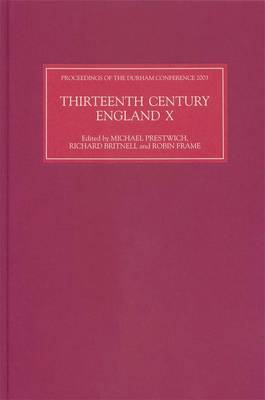
Thirteenth Century England X
Proceedings of the Durham Conference, 2003
€ 177,45
+ 354 punten
Omschrijving
As in previous volumes of this well-established series, most papers are concerned with the political, social, cultural, economic and ecclesiastical history of England during a 'long' thirteenth century [c 1180 - c 1330]. Thirteenth Century England X contains papers on crown finances [Nick Barratt], grants of markets and fairs [Emilia Jamroziak], royal stewards of alien origin [Michael Ray], the aftermath of the Barons' War [Susan Stewart], the readership of Wace's Roman de Brut [Françoise Le Saux], Robert de Chaury bishop of Carlisle [Henry Summerson], authority in Yorkshire nunneries [Janet Burton], and taxation and settlement in Devon [Harold Fox]. There are three papers on various aspects of the reign of Edward II and its aftermath [David Crook, Alistair Tebbit and Seymour Phillips]. The volume also follows the tradition of the series by looking beyond England, with papers on the role of Joan, wife of Llywelyn the Great in Anglo-Welsh relations [Louise J. Wilkinson], on the city of Dublin's relations with the crown [Seán Duffy], and on English landholding in Ireland [Beth Hartland]. The continental connection is represented by a comparison of aspects of English and French kingship in the time of Henry III and Louis IX [David Carpenter].
Specificaties
Betrokkenen
- Uitgeverij:
Inhoud
- Aantal bladzijden:
- 240
- Taal:
- Engels
- Reeks:
- Reeksnummer:
- nr. 10
Eigenschappen
- Productcode (EAN):
- 9781843831228
- Verschijningsdatum:
- 1/04/2005
- Uitvoering:
- Hardcover
- Formaat:
- Genaaid
- Afmetingen:
- 162 mm x 240 mm
- Gewicht:
- 544 g

Alleen bij Standaard Boekhandel
+ 354 punten op je klantenkaart van Standaard Boekhandel

Beoordelingen
We publiceren alleen reviews die voldoen aan de voorwaarden voor reviews. Bekijk onze voorwaarden voor reviews.