


- Afhalen na 1 uur in een winkel met voorraad
- Gratis thuislevering in België vanaf € 30
- Ruim aanbod met 7 miljoen producten
- Afhalen na 1 uur in een winkel met voorraad
- Gratis thuislevering in België vanaf € 30
- Ruim aanbod met 7 miljoen producten




€ 20,45
+ 40 punten
Omschrijving
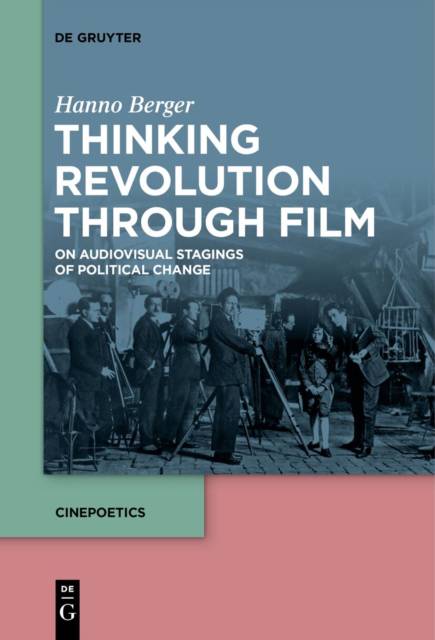
This book aims to redefine the relationship between film and revolution. Starting with Hannah Arendt's thoughts on the American and French Revolution, it argues that, from a theoretical perspective, revolutions can be understood as describing a relationship between time and movement and that ultimately the spectators and not the actors in a revolution decide its outcome. Focusing on the concepts of 'time, ' 'movement, ' and 'spectators, ' this study develops an understanding of film not as a medium of agitation but as a way of thinking that relates to the idea of historicity that opened up with the American and French Revolution, a way of thinking that can expand our very notion of revolution. The book explores this expansion through an analysis of three audiovisual stagings of revolution: Abel Gance's epic on the French Revolution Napoléon, Warren Beatty's essay on the Russian Revolution Reds, and the miniseries John Adams about the American Revolution. The author thereby offers a fresh take on the questions of revolution and historicity from the perspective of film studies.
Specificaties
Betrokkenen
- Auteur(s):
- Uitgeverij:
Inhoud
- Aantal bladzijden:
- 233
- Taal:
- Engels
- Reeks:
- Reeksnummer:
- nr. 10
Eigenschappen
- Productcode (EAN):
- 9783111529394
- Verschijningsdatum:
- 17/06/2024
- Uitvoering:
- Paperback
- Formaat:
- Trade paperback (VS)
- Afmetingen:
- 156 mm x 234 mm
- Gewicht:
- 331 g


Alleen bij Standaard Boekhandel
+ 40 punten op je klantenkaart van Standaard Boekhandel
Cadeau

AANGERADEN


Beoordelingen
We publiceren alleen reviews die voldoen aan de voorwaarden voor reviews. Bekijk onze voorwaarden voor reviews.