


- Afhalen na 1 uur in een winkel met voorraad
- Gratis thuislevering in België vanaf € 30
- Ruim aanbod met 7 miljoen producten
- Afhalen na 1 uur in een winkel met voorraad
- Gratis thuislevering in België vanaf € 30
- Ruim aanbod met 7 miljoen producten





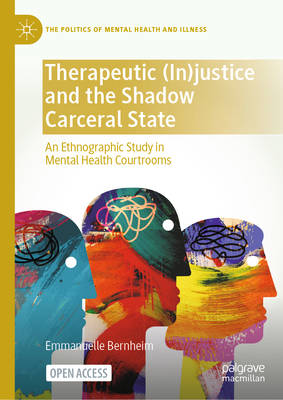
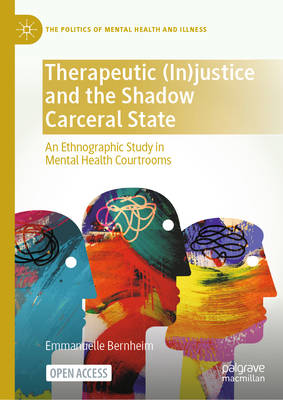
Therapeutic (In)Justice and the Shadow Carceral State
An Ethnographic Study in Mental Health Courtrooms
Emmanuelle Bernheim
€ 53,45
+ 106 punten
Eenvoudig bestellen
Veilig betalen


Gratis thuislevering vanaf € 30 (via bpost)
Gratis levering in je Standaard Boekhandel
Omschrijving
This open access book draws on unique ethnographic fieldwork carried out in four Quebec mental health courtrooms to examine the role courts play in the organization and implementation of psychiatric coercion. It provides a much-needed critical and empirical analysis of these judicial practices at a time when social inequalities have been deepening and the legal devices that facilitate psychiatric coercion in hospitals or in the community have been multiplying, and where the voices of psychiatrically labeled individuals are marginalized.
Employing a cross-sectional and structural analysis of judicial practices across different mental health courtrooms, this research investigates the coercive and violent dimensions of a process that is considered therapeutic. The book offers a critical, intersectional analysis of judicial practices, highlights the multiple legal procedures and court orders individuals can be subjected too, and examines the development of a mental health justice market. The author argues that often the legal framework has little impact on judicial practices and demonstrates the impact of paternalistic conceptions of mental health and organizational constraints. This compelling work underscores the violence of a justice system that ignores and denigrates people's experiential knowledge and disregards rights in favor of holding individuals accountable for their poor living conditions.
It will appeal to students and scholars of mental health, medical sociology, mad studies, the sociology of law and deviance, judicial ethnography and critical psychology and psychiatry, as well as to allied health and social care professionals.
Specificaties
Betrokkenen
- Auteur(s):
- Uitgeverij:
Inhoud
- Aantal bladzijden:
- 296
- Taal:
- Engels
- Reeks:
Eigenschappen
- Productcode (EAN):
- 9783032161857
- Verschijningsdatum:
- 2/08/2026
- Uitvoering:
- Hardcover
- Formaat:
- Genaaid
- Afmetingen:
- 148 mm x 210 mm


Alleen bij Standaard Boekhandel
+ 106 punten op je klantenkaart van Standaard Boekhandel
CADEAU

AANGERADEN


Beoordelingen
We publiceren alleen reviews die voldoen aan de voorwaarden voor reviews. Bekijk onze voorwaarden voor reviews.