


- Afhalen na 1 uur in een winkel met voorraad
- Gratis thuislevering in België vanaf € 30
- Ruim aanbod met 7 miljoen producten
- Afhalen na 1 uur in een winkel met voorraad
- Gratis thuislevering in België vanaf € 30
- Ruim aanbod met 7 miljoen producten





Omschrijving
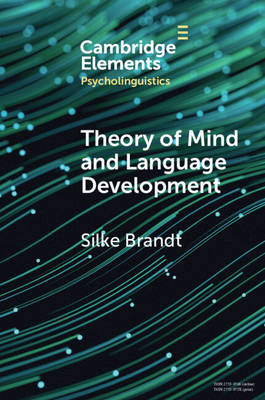
This Elements presents a series of studies investigating the relationship between language, Theory of Mind, and other cognitive skills, across different languages and cultures. The first set of studies focuses on longitudinal relationships between English-speaking children's understanding of complement-clause constructions (e.g., The cow knows the sticker is in the red box), mental verbs (e.g., know vs. think), modal verbs (e.g., must vs. might), and Theory of Mind. The second set of studies investigates links between complement-clause constructions, mental verbs, and Theory of Mind in Mandarin Chinese and English. The last study looks at English- and Turkish-speaking children's knowledge of evidentiality, source monitoring, and Theory of Mind. Together, these studies suggest that there are different linguistic tools that enable children to represent and acquire Theory of Mind, and that the availability and choice of these linguistic tools differ across languages and cultures.
Specificaties
Betrokkenen
- Auteur(s):
- Uitgeverij:
Inhoud
- Aantal bladzijden:
- 75
- Taal:
- Engels
- Reeks:
Eigenschappen
- Productcode (EAN):
- 9781009496247
- Verschijningsdatum:
- 31/07/2026
- Uitvoering:
- Paperback
- Formaat:
- Trade paperback (VS)


Alleen bij Standaard Boekhandel
+ 48 punten op je klantenkaart van Standaard Boekhandel
Cadeau

AANGERADEN


Beoordelingen
We publiceren alleen reviews die voldoen aan de voorwaarden voor reviews. Bekijk onze voorwaarden voor reviews.