


- Afhalen na 1 uur in een winkel met voorraad
- Gratis thuislevering in België vanaf € 30
- Ruim aanbod met 7 miljoen producten
- Afhalen na 1 uur in een winkel met voorraad
- Gratis thuislevering in België vanaf € 30
- Ruim aanbod met 7 miljoen producten





€ 52,95
+ 105 punten
Omschrijving
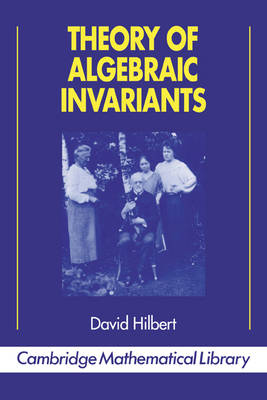
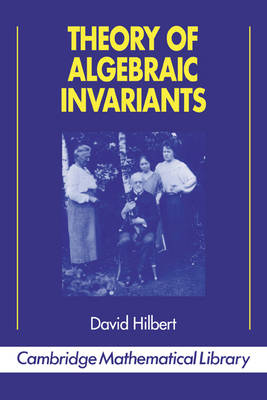
In the summer of 1897, David Hilbert (1862-1943) gave an introductory course in Invariant Theory at the University of Gottingen. This book is an English translation of the handwritten notes taken from this course by Hilbert's student Sophus Marxen. At that time his research in the subject had been completed, and his famous finiteness theorem had been proved and published in two papers that changed the course of invariant theory dramatically and that laid the foundation for modern commutative algebra. Thus, these lectures take into account both the old approach of his predecessors and his new ideas. This bridge from nineteenth to twentieth century mathematics makes these lecture notes a special and fascinating account of invariant theory. Hilbert's course was given at a level accessible to graduate students in mathematics, requiring only a familiarity with linear algebra and the basics of ring and group theory. The text will be useful as a self-contained introduction to invariant theory. But it will also be invaluable as a historical source for anyone interested in the foundations of twentieth-century mathematics.
Specificaties
Betrokkenen
- Auteur(s):
- Vertaler(s):
- Uitgeverij:
Inhoud
- Aantal bladzijden:
- 208
- Taal:
- Engels
- Reeks:
Eigenschappen
- Productcode (EAN):
- 9780521449038
- Verschijningsdatum:
- 26/11/1993
- Uitvoering:
- Paperback
- Formaat:
- Trade paperback (VS)
- Afmetingen:
- 153 mm x 229 mm
- Gewicht:
- 290 g


Alleen bij Standaard Boekhandel
+ 105 punten op je klantenkaart van Standaard Boekhandel
Cadeau

AANGERADEN


Beoordelingen
We publiceren alleen reviews die voldoen aan de voorwaarden voor reviews. Bekijk onze voorwaarden voor reviews.