


- Afhalen na 1 uur in een winkel met voorraad
- Gratis thuislevering in België vanaf € 30
- Ruim aanbod met 7 miljoen producten
- Afhalen na 1 uur in een winkel met voorraad
- Gratis thuislevering in België vanaf € 30
- Ruim aanbod met 7 miljoen producten





€ 24,45
+ 48 punten
Uitvoering
Omschrijving
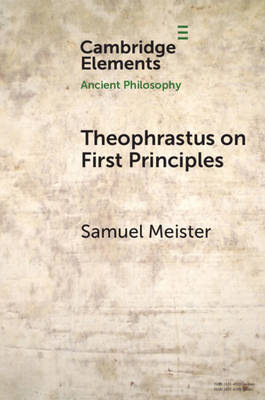
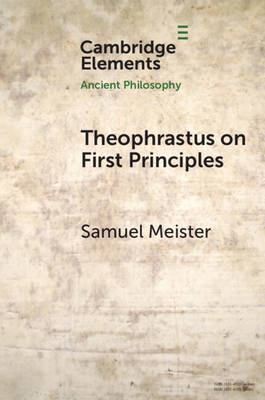
Theophrastus' so-called Metaphysics presents a series of difficulties for various accounts of first principles, including Platonist ones but also - and especially - Aristotle's. Hence, many scholars think that Theophrastus abandons some of his teacher's core commitments, such as the prime mover or natural teleology. Other interpreters, by contrast, emphasize the aporematic character of the work and do not take Theophrastus to be truly critical of Aristotle. In the author's view, neither reading captures the character of the treatise. For, as argued in this Element, Theophrastus probes the Aristotelian account of first principles in earnest. But this is not to say that he abandons it. Rather, Theophrastus is an internal critic of an Aristotelian framework to which he himself is committed but of which he thinks that it requires further elaboration.
Specificaties
Betrokkenen
- Auteur(s):
- Uitgeverij:
Inhoud
- Aantal bladzijden:
- 72
- Taal:
- Engels
- Reeks:
Eigenschappen
- Productcode (EAN):
- 9781009708265
- Verschijningsdatum:
- 2/04/2026
- Uitvoering:
- Paperback
- Formaat:
- Trade paperback (VS)
- Afmetingen:
- 152 mm x 229 mm
- Gewicht:
- 108 g


Alleen bij Standaard Boekhandel
+ 48 punten op je klantenkaart van Standaard Boekhandel
Cadeau

AANGERADEN


Beoordelingen
We publiceren alleen reviews die voldoen aan de voorwaarden voor reviews. Bekijk onze voorwaarden voor reviews.