


- Afhalen na 1 uur in een winkel met voorraad
- Gratis thuislevering in België vanaf € 30
- Ruim aanbod met 7 miljoen producten
- Afhalen na 1 uur in een winkel met voorraad
- Gratis thuislevering in België vanaf € 30
- Ruim aanbod met 7 miljoen producten





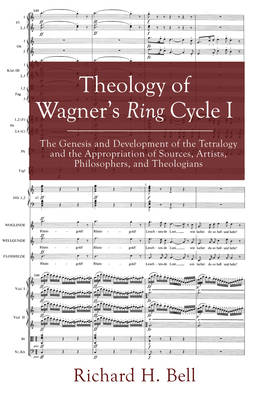
Theology of Wagner's Ring Cycle I
The Genesis and Development of the Tetralogy and the Appropriation of Sources, Artists, Philosophers, and Theologians
Richard H Bell
Paperback | Engels
€ 58,45
+ 116 punten
Uitvoering
Omschrijving
Wagner's Ring is one of the greatest of all artworks of Western civilization, but what is it all about? The power and mystery of Wagner's creation was such that he himself felt he stood before his work "as though before some puzzle." A clue to the Ring's greatness lies in its multiple avenues of self-disclosure and the corresponding plethora of interpretations that over the years has granted ample scope for directors and will no doubt do so well into the distant future. One possible interpretation, which Richard Bell argues should be taken seriously, is the Ring as Christian theology. In this first of two volumes, Bell considers, among other things, how the composer's Christian interests may be detected in the "forging" of his Ring, looking at how he appropriated his sources (whether they be myths and sagas, writers, poets, or philosophers) and considering works composed around the same time, especially his Jesus of Nazareth.
Specificaties
Betrokkenen
- Auteur(s):
- Uitgeverij:
Inhoud
- Aantal bladzijden:
- 342
- Taal:
- Engels
Eigenschappen
- Productcode (EAN):
- 9781498235631
- Verschijningsdatum:
- 21/01/2020
- Uitvoering:
- Paperback
- Formaat:
- Trade paperback (VS)
- Afmetingen:
- 178 mm x 254 mm
- Gewicht:
- 594 g


Alleen bij Standaard Boekhandel
+ 116 punten op je klantenkaart van Standaard Boekhandel
Cadeau

AANGERADEN


Beoordelingen
We publiceren alleen reviews die voldoen aan de voorwaarden voor reviews. Bekijk onze voorwaarden voor reviews.