


- Afhalen na 1 uur in een winkel met voorraad
- Gratis thuislevering in België vanaf € 30
- Ruim aanbod met 7 miljoen producten
- Afhalen na 1 uur in een winkel met voorraad
- Gratis thuislevering in België vanaf € 30
- Ruim aanbod met 7 miljoen producten




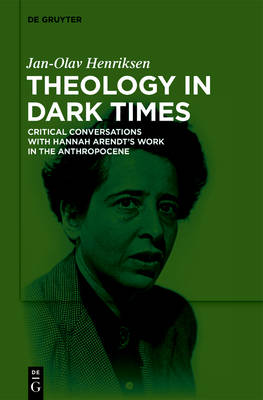
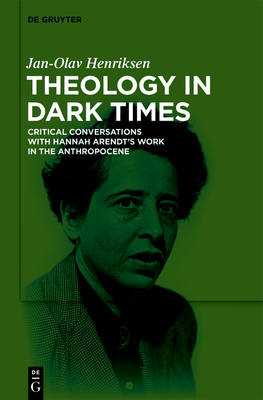
Theology in Dark Times
Critical Conversations with Hannah Arendt's Work in the Anthropocene
Jan-Olav Henriksen
Hardcover | Engels
€ 93,45
+ 186 punten
Omschrijving
Hannah Arendt is one of the most profound and challenging thinkers of the 20th century, and her contribution to the undeniably grim present political and ecological conditions are still of relevance. Her originality lies in her distinctive interpretation of the modern world. She offers tools that help to transcend conventional patterns of thought.
Accordingly, the present work argues that Hannah Arendt's work is of political, ecological and theological relevance. The present book is written because of the relatively limited reception by political ecologists, theologians, ethicists, and philosophers of religion who engage in these topics. The connection between the different horizons within which Arendt's work is engaged is closer than it might appear at first glance. The book is not only an attempt to interpret Arendt in light of contemporary challenges; it also seeks to reflect critically on her ideas. It approaches Arendt's work through the lenses of theology and especially theological anthropology. Contrary to what some may assume, the perspective this approach represents does not overlook the significance of historical, political, social, and cultural contexts. A conversation with Arendt's ideas may play a crucial role, also because of her criticism of significant strands of Christian faith.
The book would be of interest to anyone engaged in Arendt's work and in the dialogue between philosophy and contemporary theology.
Specificaties
Betrokkenen
- Auteur(s):
- Uitgeverij:
Inhoud
- Aantal bladzijden:
- 320
- Taal:
- Engels
Eigenschappen
- Productcode (EAN):
- 9783112255278
- Verschijningsdatum:
- 1/09/2026
- Uitvoering:
- Hardcover
- Formaat:
- Genaaid
- Afmetingen:
- 160 mm x 240 mm


Alleen bij Standaard Boekhandel
+ 186 punten op je klantenkaart van Standaard Boekhandel
Cadeau

AANGERADEN


Beoordelingen
We publiceren alleen reviews die voldoen aan de voorwaarden voor reviews. Bekijk onze voorwaarden voor reviews.