


- Afhalen na 1 uur in een winkel met voorraad
- Gratis thuislevering in België vanaf € 30
- Ruim aanbod met 7 miljoen producten
- Afhalen na 1 uur in een winkel met voorraad
- Gratis thuislevering in België vanaf € 30
- Ruim aanbod met 7 miljoen producten





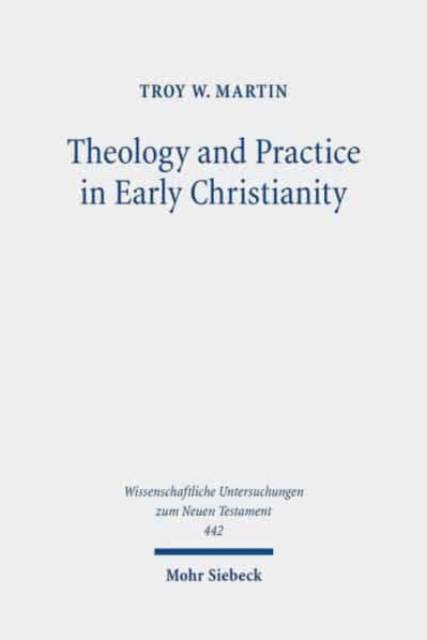
Theology and Practice in Early Christianity
Essays New and Old with Updated Reception Histories
Troy W Martin
€ 181,45
+ 362 punten
Omschrijving
Early Christianity did not originate in a vacuum but in a world of linguistic, social, religious, and cultural richness and diversity. The twenty-two seminal essays in this volume - some previously published, some newly written - represent almost three decades of research by Troy W. Martin to understand how early Christianity developed in the ancient world. The broad-ranging investigations in these essays give attention not only to the linguistic and rhetorical features of early Christian texts, but also to the social, philosophical, physiological, and medical contexts in which these texts were written. The essays provide new understandings of early Christian conceptions of salvation and of the virtues of faith, hope and love that characterized early Christian communities. They include new medical and physiological explanations of early Christian sacraments, pneumatology, and eschatology and furthermore investigate early Christian communal life and practice, including the veiling of women, male/female relationships, and time-keeping. The essays include reception histories that describe their influence on subsequent research and place them within the context of contemporary research and scholarship. Those familiar with the well-trodden ground of New Testament studies will find in these essays new insights and previously unexplored comparative material for understanding early Christianity and the world in which it originated.
Specificaties
Betrokkenen
- Auteur(s):
- Uitgeverij:
Inhoud
- Aantal bladzijden:
- 553
- Taal:
- Engels
- Reeks:
- Reeksnummer:
- nr. 442
Eigenschappen
- Productcode (EAN):
- 9783161548116
- Verschijningsdatum:
- 1/08/2020
- Uitvoering:
- Hardcover
- Formaat:
- Genaaid
- Afmetingen:
- 163 mm x 231 mm
- Gewicht:
- 952 g


Alleen bij Standaard Boekhandel
+ 362 punten op je klantenkaart van Standaard Boekhandel
Cadeau

AANGERADEN


Beoordelingen
We publiceren alleen reviews die voldoen aan de voorwaarden voor reviews. Bekijk onze voorwaarden voor reviews.