


- Afhalen na 1 uur in een winkel met voorraad
- Gratis thuislevering in België vanaf € 30
- Ruim aanbod met 7 miljoen producten
- Afhalen na 1 uur in een winkel met voorraad
- Gratis thuislevering in België vanaf € 30
- Ruim aanbod met 7 miljoen producten




Omschrijving
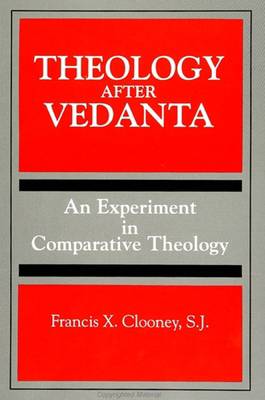
Where Advaita Vedānta, sacred text, and comparative theology meet-truth emerges through the act of reading itself.
What does it mean to read a sacred text so carefully that it changes the reader? In this ambitious and deeply learned work, Francis X. Clooney, S.J., offers an exploration of Advaita Vedānta not as a set of abstract doctrines, but as a disciplined practice of reading-one that forms truth, theology, and the theologian together within the texture of the text itself.
Moving through the Upaniṣads, Śaṅkara's commentaries, and the Uttara Mīmāṃsā Sūtras, Clooney reveals Advaita as a living, rigorously argued tradition in which meaning emerges through sustained engagement, debate, and commentary. Truth, he argues, is not grasped outside the text or prior to it, but arises after the text-through the transformative participation of a trained and desiring reader. By attending closely to textual structure, reasoning strategies, and interpretive practices, this book reorients how Advaita Vedānta is understood and studied.
The final chapters extend this insight into a bold experiment in comparative theology, placing Advaita Vedānta and Thomas Aquinas's Summa Theologiae into sustained conversation. Rejecting both superficial comparison and detached theory, Clooney models a form of theological "neighborliness" grounded in fidelity to texts and traditions. The result is a compelling vision of comparative theology as an educational, ethical, and spiritual practice-one that reshapes how truth, doctrine, and interreligious understanding are pursued today.
Specificaties
Betrokkenen
- Auteur(s):
- Uitgeverij:
Inhoud
- Aantal bladzijden:
- 284
- Taal:
- Engels
- Reeks:
Eigenschappen
- Productcode (EAN):
- 9780791413661
- Verschijningsdatum:
- 2/03/1993
- Uitvoering:
- Paperback
- Formaat:
- Trade paperback (VS)
- Afmetingen:
- 152 mm x 226 mm
- Gewicht:
- 408 g


Alleen bij Standaard Boekhandel
Cadeau

AANGERADEN


Beoordelingen
We publiceren alleen reviews die voldoen aan de voorwaarden voor reviews. Bekijk onze voorwaarden voor reviews.