


- Afhalen na 1 uur in een winkel met voorraad
- Gratis thuislevering in België vanaf € 30
- Ruim aanbod met 7 miljoen producten
- Afhalen na 1 uur in een winkel met voorraad
- Gratis thuislevering in België vanaf € 30
- Ruim aanbod met 7 miljoen producten





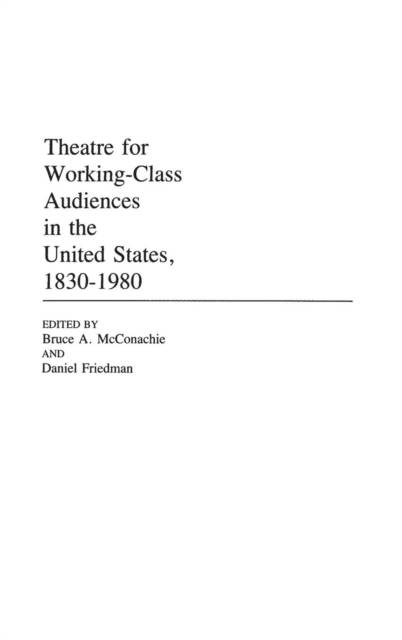
Theatre for Working-Class Audiences in the United States, 1830-1980
Daniel Friedman, Bruce McConachie
€ 169,95
+ 339 punten
Omschrijving
This collection of essays defines and explores American theatres that consciously appealed primarily to workers. The scope of the book extends from the 1830s to the 1980s. Different authors focus on how various plays related to the audience as a class, the historically dynamic interaction between spectators and actors, and why certain plays gained popularity. The collection encompasses essays concerning New York theatre in the 1830s and 1840s, Pittsburgh theatre in the 1870s, various immigrant productions of the late nineteenth and early twentieth century, the politically radical theatre of the 1930s, a concluding section on recent and contemporary theatre for workers, and an overview of the history, politics, and aesthetics of theatres doing shows for working-class audiences today. An original and comprehensive bibliographical essay regarding the history of theatres for workers in the United States completes the volume.
Specificaties
Betrokkenen
- Auteur(s):
- Uitgeverij:
Inhoud
- Aantal bladzijden:
- 265
- Taal:
- Engels
- Reeks:
Eigenschappen
- Productcode (EAN):
- 9780313246296
- Verschijningsdatum:
- 14/11/1985
- Uitvoering:
- Hardcover
- Formaat:
- Genaaid
- Afmetingen:
- 160 mm x 238 mm
- Gewicht:
- 589 g


Alleen bij Standaard Boekhandel
+ 339 punten op je klantenkaart van Standaard Boekhandel
Cadeau

AANGERADEN


Beoordelingen
We publiceren alleen reviews die voldoen aan de voorwaarden voor reviews. Bekijk onze voorwaarden voor reviews.