


- Afhalen na 1 uur in een winkel met voorraad
- Gratis thuislevering in België vanaf € 30
- Ruim aanbod met 7 miljoen producten
- Afhalen na 1 uur in een winkel met voorraad
- Gratis thuislevering in België vanaf € 30
- Ruim aanbod met 7 miljoen producten





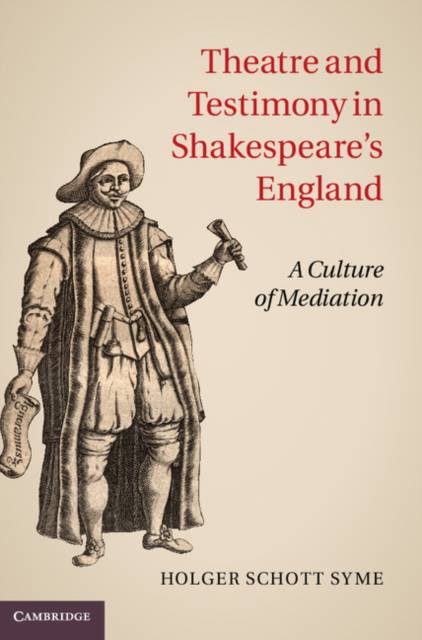
Theatre and Testimony in Shakespeare's England
A Culture of Mediation
Holger Schott Syme
Hardcover | Engels
€ 172,95
+ 345 punten
Uitvoering
Omschrijving
Holger Syme presents a radically new explanation for the theater's importance in Shakespeare's time. He portrays early modern England as a culture of mediation, dominated by transactions in which one person stood in for another, giving voice to absent speakers or bringing past events to life. No art form related more immediately to this culture than the theater. Arguing against the influential view that the period underwent a crisis of representation, Syme draws upon extensive archival research in the fields of law, demonology, historiography and science to trace a pervasive conviction that testimony and report, delivered by properly authorized figures, provided access to truth. Through detailed close readings of plays by Ben Jonson and William Shakespeare - in particular Volpone, Richard II and The Winter's Tale - and analyses of criminal trial procedures, the book constructs a revisionist account of the nature of representation on the early modern stage.
Specificaties
Betrokkenen
- Auteur(s):
- Uitgeverij:
Inhoud
- Aantal bladzijden:
- 298
- Taal:
- Engels
Eigenschappen
- Productcode (EAN):
- 9781107011854
- Verschijningsdatum:
- 1/12/2011
- Uitvoering:
- Hardcover
- Formaat:
- Ongenaaid / garenloos gebonden
- Afmetingen:
- 155 mm x 231 mm
- Gewicht:
- 612 g


Alleen bij Standaard Boekhandel
+ 345 punten op je klantenkaart van Standaard Boekhandel
Cadeau

AANGERADEN


Beoordelingen
We publiceren alleen reviews die voldoen aan de voorwaarden voor reviews. Bekijk onze voorwaarden voor reviews.