


- Afhalen na 1 uur in een winkel met voorraad
- Gratis thuislevering in België vanaf € 30
- Ruim aanbod met 7 miljoen producten
- Afhalen na 1 uur in een winkel met voorraad
- Gratis thuislevering in België vanaf € 30
- Ruim aanbod met 7 miljoen producten




€ 34,95
+ 69 punten
Omschrijving
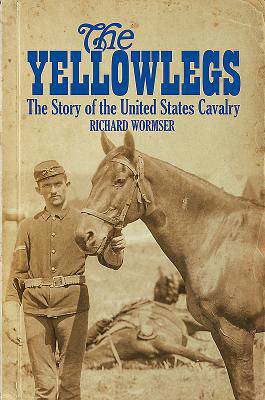
"Wormser's writing balances an abundance of details with enthralling storytelling. He recounts cavalry exploits in dynamic salutes to the subjects." - Toy Soldier & Model Figure
The story of America's cavalry is extraordinarily rich in colorful, and often flamboyant, personalities and exciting action. Indeed, much of the early military history of the United States is dominated by the exploits of its horse-soldiers.In this comprehensive and lively account, the author - who was himself an enthusiastic horseman - narrates the major events and characters of the US Cavalry's formative, and, some might say fruitful, years. From the American Revolution and the exploits of men such as Henry 'Light-Horse Harry' Lee III and Francis Marion, the first of the guerrillas, the author follows on with Stephen Kearny, the 'Father of the Cavalry' whose Dragoons went West to California on mules, and his nephew Philip, who organized the famed Gray Horse Troop of the Mexican War.Other famous names that feature in this narrative are those of Jonathan 'Stonewall' Jackson, George Crook, who admired the Indians it was his duty to hunt down, and George Armstrong Custer. A United States Army officer and cavalry commander who served with distinction in the American Civil War, Custer is most commonly remembered for leading more than 200 of his men to their deaths in the Battle of the Little Bighorn in June 1876. Also known as 'Custer's Last Stand', Bighorn was part of the Black Hills War against a confederation of Plains Indians, including the Cheyenne and Dakota Sioux. It remains one of the most controversial battles in American history.Roosevelt's Roughriders and Black Jack Pershing, who led his troops in an automobile, complete the narrative - one which is undoubtedly a saga of daring raids, of epic marches, and of grueling battles. As the author reveals, the story of the US Cavalry is also the story of the birth and growth of America itself.
The story of America's cavalry is extraordinarily rich in colorful, and often flamboyant, personalities and exciting action. Indeed, much of the early military history of the United States is dominated by the exploits of its horse-soldiers.In this comprehensive and lively account, the author - who was himself an enthusiastic horseman - narrates the major events and characters of the US Cavalry's formative, and, some might say fruitful, years. From the American Revolution and the exploits of men such as Henry 'Light-Horse Harry' Lee III and Francis Marion, the first of the guerrillas, the author follows on with Stephen Kearny, the 'Father of the Cavalry' whose Dragoons went West to California on mules, and his nephew Philip, who organized the famed Gray Horse Troop of the Mexican War.Other famous names that feature in this narrative are those of Jonathan 'Stonewall' Jackson, George Crook, who admired the Indians it was his duty to hunt down, and George Armstrong Custer. A United States Army officer and cavalry commander who served with distinction in the American Civil War, Custer is most commonly remembered for leading more than 200 of his men to their deaths in the Battle of the Little Bighorn in June 1876. Also known as 'Custer's Last Stand', Bighorn was part of the Black Hills War against a confederation of Plains Indians, including the Cheyenne and Dakota Sioux. It remains one of the most controversial battles in American history.Roosevelt's Roughriders and Black Jack Pershing, who led his troops in an automobile, complete the narrative - one which is undoubtedly a saga of daring raids, of epic marches, and of grueling battles. As the author reveals, the story of the US Cavalry is also the story of the birth and growth of America itself.
Specificaties
Betrokkenen
- Auteur(s):
- Uitgeverij:
Inhoud
- Aantal bladzijden:
- 464
- Taal:
- Engels
Eigenschappen
- Productcode (EAN):
- 9781526742346
- Verschijningsdatum:
- 15/03/2019
- Uitvoering:
- Hardcover
- Formaat:
- Genaaid
- Afmetingen:
- 160 mm x 236 mm
- Gewicht:
- 839 g


Alleen bij Standaard Boekhandel
+ 69 punten op je klantenkaart van Standaard Boekhandel
Wedstrijd


Beoordelingen
We publiceren alleen reviews die voldoen aan de voorwaarden voor reviews. Bekijk onze voorwaarden voor reviews.