


- Afhalen na 1 uur in een winkel met voorraad
- Gratis thuislevering in België vanaf € 30
- Ruim aanbod met 7 miljoen producten
- Afhalen na 1 uur in een winkel met voorraad
- Gratis thuislevering in België vanaf € 30
- Ruim aanbod met 7 miljoen producten





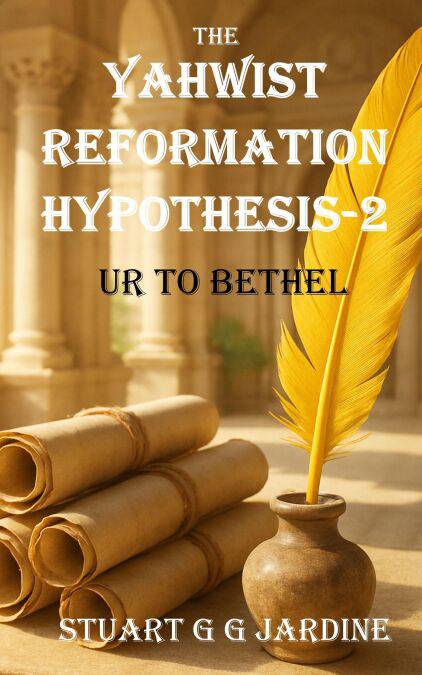
The Yahwist Reformation Hypothesis-2 Ur to Bethel E-BOOK
The Yahwist Reformation Hypothesis, #2
Stuart G G Jardine
€ 4,49
+ 4 punten
Omschrijving
We recommence our biblical adventures in Ur of the Chaldeans. The Chaldeans were Neo-Babylonians. Being in Ur of the Neo-Babylonians just after the tower of the Old Babylonians had collapsed puts us in entirely the wrong period of biblical time, because biblical folks aren't due to arrive in Neo-Babylonia for another thousand years or so.
But that doesn't matter when it comes to the state of the human mind known as belief.
And it also doesn't matter because allegorical biblical folklore can reference several periods of historical time in the one story.
Ancient folks (and certain modern ones) believed that human history repeated in great Cosmic Cycles as though moved by a Divine Hand. It's fascinating to imagine how it all may work, and how human imaginings have a way of morphing into religious dogma.
We're going to tag along with the biblical Abraham and his dysfunctional family and keep in mind the possibility that the possibly fictional Abraham character may represent genuine historical characters like Sargon the Great and Hammurabi the Great and the successors of Alexander the Great all at the same time in a jumbled and contradictory collation of highly improbable and politically libellous fables that not a soul ever demonstrates had anything whatsoever to with anyone's notion of what God may possibly be.
We'll also keep in mind the fact that not a single human, superhuman, or supernatural biblical character in the first eight books of biblical writings has ever been shown to exist anywhere other than in the human ability to imagine them.
Specificaties
Betrokkenen
- Auteur(s):
- Uitgeverij:
Inhoud
- Taal:
- Engels
- Reeks:
Eigenschappen
- Productcode (EAN):
- 9798233777608
- Verschijningsdatum:
- 16/02/2026
- Uitvoering:
- E-book
- Formaat:
- ePub


Alleen bij Standaard Boekhandel
+ 4 punten op je klantenkaart van Standaard Boekhandel
Cadeau

AANGERADEN


Beoordelingen
We publiceren alleen reviews die voldoen aan de voorwaarden voor reviews. Bekijk onze voorwaarden voor reviews.