


- Afhalen na 1 uur in een winkel met voorraad
- Gratis thuislevering in België vanaf € 30
- Ruim aanbod met 7 miljoen producten
- Afhalen na 1 uur in een winkel met voorraad
- Gratis thuislevering in België vanaf € 30
- Ruim aanbod met 7 miljoen producten




Omschrijving
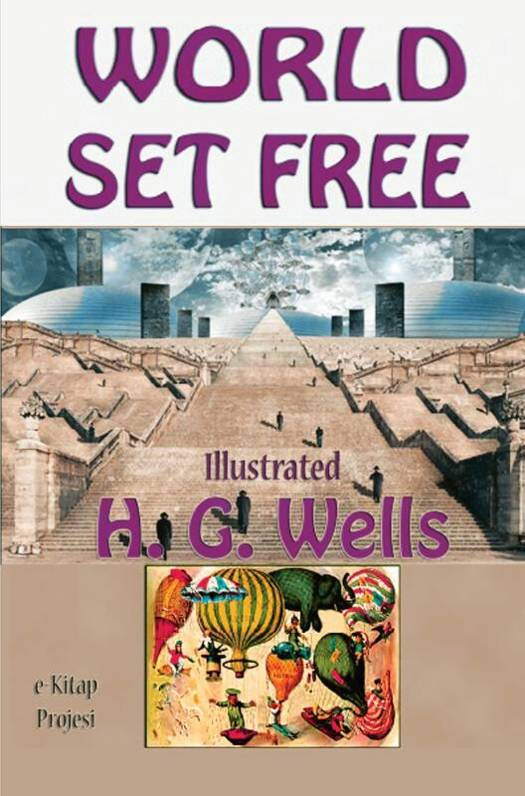
The World Set Free is a novel written in 1913 and published in 1914 by H. G. Wells. The book is based on a prediction of nuclear weapons of a more destructive and uncontrollable sort than the world has yet seen. It had appeared first in serialised form with a different ending as A Prophetic Trilogy, consisting of three books: A Trap to Catch the Sun, The Last War in the World and The World Set Free.
A frequent theme of Wells's work, as in his 1901 nonfiction book Anticipations, was the history of humans' mastery of power and energy through technological advance, seen as a determinant of human progress. The novel begins: "The history of mankind is the history of the attainment of external power. Man is the tool-using, fire-making animal. . . .
Always down a lengthening record, save for a set-back ever and again, he is doing more." (Many of the ideas Wells develops here found a fuller development when he wrote The Outline of History in 1918-1919.) The novel is dedicated "To Frederick Soddy's Interpretation of Radium," a volume published in 1909.
A frequent theme of Wells's work, as in his 1901 nonfiction book Anticipations, was the history of humans' mastery of power and energy through technological advance, seen as a determinant of human progress. The novel begins: "The history of mankind is the history of the attainment of external power. Man is the tool-using, fire-making animal. . . .
Always down a lengthening record, save for a set-back ever and again, he is doing more." (Many of the ideas Wells develops here found a fuller development when he wrote The Outline of History in 1918-1919.) The novel is dedicated "To Frederick Soddy's Interpretation of Radium," a volume published in 1909.
Specificaties
Betrokkenen
- Auteur(s):
- Uitgeverij:
Inhoud
- Aantal bladzijden:
- 272
- Taal:
- Engels
Eigenschappen
- Productcode (EAN):
- 9786253870072
- Verschijningsdatum:
- 14/03/2025
- Uitvoering:
- Paperback
- Afmetingen:
- 155 mm x 235 mm
- Gewicht:
- 470 g


Alleen bij Standaard Boekhandel
+ 45 punten op je klantenkaart van Standaard Boekhandel
CADEAU


Beoordelingen
We publiceren alleen reviews die voldoen aan de voorwaarden voor reviews. Bekijk onze voorwaarden voor reviews.