


- Afhalen na 1 uur in een winkel met voorraad
- Gratis thuislevering in België vanaf € 30
- Ruim aanbod met 7 miljoen producten
- Afhalen na 1 uur in een winkel met voorraad
- Gratis thuislevering in België vanaf € 30
- Ruim aanbod met 7 miljoen producten





€ 51,94
+ 103 punten
Omschrijving
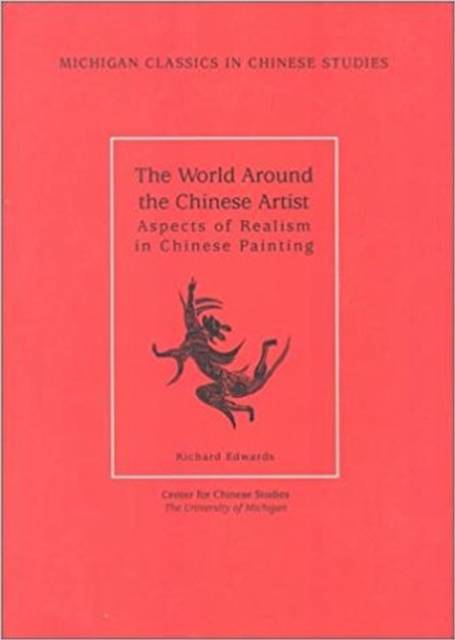
In Chinese painting there is no clear desire to separate the subjective world and the objective world. Rather, there is a constant, conscious play between the physical reality of the world and the subjective vision of the artist. The artist is continually imitating the world--sometimes more, sometimes less--but he never denies its appearance to the point of total abstraction; nor, in the other extreme, does he claim for the physical world an existence independent of his own involvement.The World around the Chinese Artist explores this special relationship between the self and the landscape in Chinese art through studies of painters Hsia Kuei (12th-13th centuries), Shen Chou (15th-16th centuries), and Shih-t'ao (17th-18th centuries). Each of these three was important in his own time and deemed a master by later critics. Hsia Kuei was Painter-in-attendance in the Academy of Painting during the reign of Emperor Ning-tsung, and he was concerned with presenting a directly observable view of a physically believable landscape. Shen Chou can be described as the inheritor of Yüan ideals and the recipient of traditional training, yet he developed his own style and sensitivity characterized by walking the hair-line between involvement in and detachment from the world he observed. Shih-t'ao was a Buddhist priest and Confucian who viewed narrow adherence to the past as unacceptable slavery and countered it with conscoius rebellion, painting with special notions of style, independence, and individuality that included freedom and abstraction.
Specificaties
Betrokkenen
- Auteur(s):
- Uitgeverij:
Inhoud
- Aantal bladzijden:
- 160
- Taal:
- Engels
- Reeks:
- Reeksnummer:
- nr. 2
Eigenschappen
- Productcode (EAN):
- 9780892641437
- Verschijningsdatum:
- 1/01/2000
- Uitvoering:
- Paperback
- Formaat:
- Trade paperback (VS)
- Afmetingen:
- 189 mm x 260 mm
- Gewicht:
- 376 g


Alleen bij Standaard Boekhandel
+ 103 punten op je klantenkaart van Standaard Boekhandel
Cadeau

AANGERADEN


Beoordelingen
We publiceren alleen reviews die voldoen aan de voorwaarden voor reviews. Bekijk onze voorwaarden voor reviews.