


- Afhalen na 1 uur in een winkel met voorraad
- Gratis thuislevering in België vanaf € 30
- Ruim aanbod met 7 miljoen producten
- Afhalen na 1 uur in een winkel met voorraad
- Gratis thuislevering in België vanaf € 30
- Ruim aanbod met 7 miljoen producten





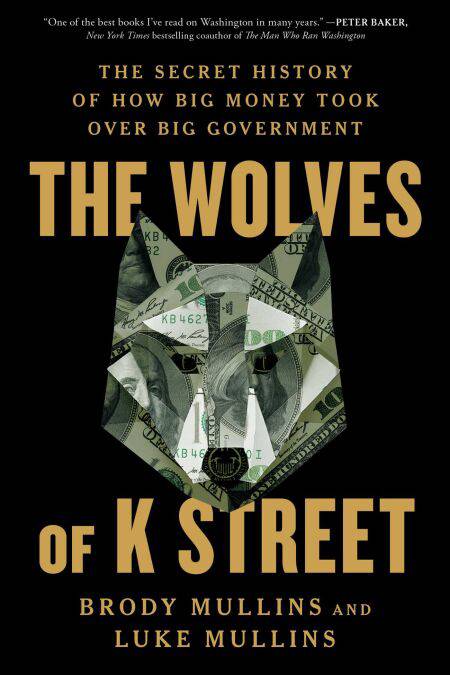
The Wolves of K Street E-BOOK
The Secret History of How Big Money Took Over Big Government
Brody Mullins, Luke Mullins
E-book | Engels
€ 19,00
+ 19 punten
Uitvoering
Eenvoudig bestellen
Veilig betalen


Onmiddellijk geleverd via e-mail
Omschrijving
A dazzling and infuriating portrait of fifty years of corporate influence in Washington, The Wolves of K Street is a “not-so-guilty pleasure” (The New York Times): irresistibly dramatic, spectacularly timely, explosive in its revelations, and impossible to put down.
In the 1970s, Washington’s center of power began to shift away from elected officials in big marble buildings to a handful of savvy, handsomely paid operators who didn’t answer to any fixed constituency. The cigar-chomping son of an influential congressman, an illustrious political fixer with a weakness for modern art, a Watergate-era dirty trickster, the city’s favorite cocktail party host—these were the sort of men who now ran Washington.
Over four decades, they’d chart new ways to turn their clients’ cash into political leverage, abandoning favor-trading in smoke-filled rooms for increasingly sophisticated tactics, such as “shadow lobbying,” where underground campaigns sparked seemingly organic public outcries to pressure lawmakers into taking actions that would ultimately benefit corporate interests rather than ordinary citizens. With billions of dollars at play, these lobbying dynasties enshrined in Washington a pro-business consensus that would guide the country’s political leaders—Democrats and Republicans alike. A good lobbyist could ghostwrite a bill or even secretly kill a piece of legislation supported by the president, both houses of Congress, and a majority of Americans.
Yet nothing lasts forever. Amid a populist backlash to the soaring inequality these influence peddlers helped usher in, DC’s pro-business alliance suddenly began to fray. And while the lobbying establishment would continue to invent new ways to influence Washington, the men who’d built K Street would soon find themselves under legal scrutiny, on the verge of financial collapse or worse. One would turn up dead behind the eighteenth green of an exclusive golf club, with a $1,500 bottle of wine at his feed and bullet in his head.
An “absorbing” (The Atlantic), “engrossing” and “meticulously researched” tale (The Guardian)—brought to life with “novelistic detail” and “considerable narrative skill” (The New York Times)—The Wolves of K Street is essential reading for anyone looking to understand how corporate interests are undermining American democracy.
In the 1970s, Washington’s center of power began to shift away from elected officials in big marble buildings to a handful of savvy, handsomely paid operators who didn’t answer to any fixed constituency. The cigar-chomping son of an influential congressman, an illustrious political fixer with a weakness for modern art, a Watergate-era dirty trickster, the city’s favorite cocktail party host—these were the sort of men who now ran Washington.
Over four decades, they’d chart new ways to turn their clients’ cash into political leverage, abandoning favor-trading in smoke-filled rooms for increasingly sophisticated tactics, such as “shadow lobbying,” where underground campaigns sparked seemingly organic public outcries to pressure lawmakers into taking actions that would ultimately benefit corporate interests rather than ordinary citizens. With billions of dollars at play, these lobbying dynasties enshrined in Washington a pro-business consensus that would guide the country’s political leaders—Democrats and Republicans alike. A good lobbyist could ghostwrite a bill or even secretly kill a piece of legislation supported by the president, both houses of Congress, and a majority of Americans.
Yet nothing lasts forever. Amid a populist backlash to the soaring inequality these influence peddlers helped usher in, DC’s pro-business alliance suddenly began to fray. And while the lobbying establishment would continue to invent new ways to influence Washington, the men who’d built K Street would soon find themselves under legal scrutiny, on the verge of financial collapse or worse. One would turn up dead behind the eighteenth green of an exclusive golf club, with a $1,500 bottle of wine at his feed and bullet in his head.
An “absorbing” (The Atlantic), “engrossing” and “meticulously researched” tale (The Guardian)—brought to life with “novelistic detail” and “considerable narrative skill” (The New York Times)—The Wolves of K Street is essential reading for anyone looking to understand how corporate interests are undermining American democracy.
Specificaties
Betrokkenen
- Auteur(s):
- Uitgeverij:
Inhoud
- Aantal bladzijden:
- 624
- Taal:
- Engels
Eigenschappen
- Productcode (EAN):
- 9781982120610
- Verschijningsdatum:
- 6/05/2024
- Uitvoering:
- E-book
- Beveiligd met:
- Adobe DRM
- Formaat:
- ePub


Alleen bij Standaard Boekhandel
+ 19 punten op je klantenkaart van Standaard Boekhandel
CADEAU

AANGERADEN


Beoordelingen
We publiceren alleen reviews die voldoen aan de voorwaarden voor reviews. Bekijk onze voorwaarden voor reviews.