


- Afhalen na 1 uur in een winkel met voorraad
- Gratis thuislevering in België vanaf € 30
- Ruim aanbod met 7 miljoen producten
- Afhalen na 1 uur in een winkel met voorraad
- Gratis thuislevering in België vanaf € 30
- Ruim aanbod met 7 miljoen producten





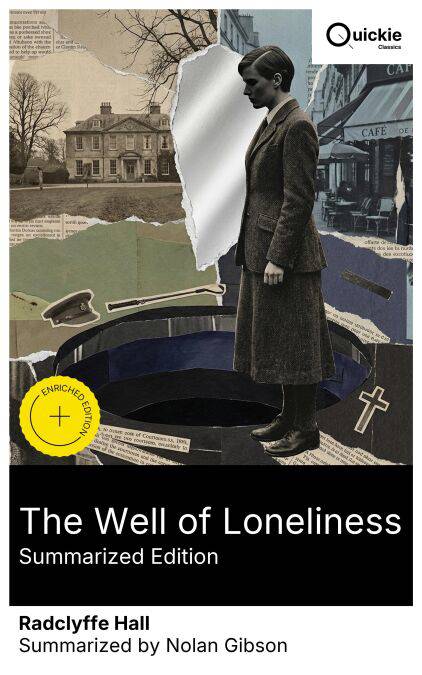
The Well of Loneliness (Summarized Edition) E-BOOK
Enriched edition. A landmark of lesbian literature on gender identity, love, and isolation in 1920s England—an LGBTQ classic of literary controversy.
Radclyffe Hall
E-book | Engels
€ 1,99
+ 1 punten
Eenvoudig bestellen
Veilig betalen


Onmiddellijk geleverd via e-mail
Omschrijving
The Well of Loneliness follows Stephen Gordon, an upper-class English 'invert,' from childhood at Morton to wartime service and expatriate Paris, charting social exile and the ethical claims of love. Hall writes in a grave realist mode—part social‑problem novel, part late‑Edwardian melodrama—shaped by sexology and Christian allegory. Restrained prose, images of mirrors and thresholds, and courtroom‑like cadences culminate in a plea for civic recognition, placing the book at the hinge between Edwardian realism and early modernist debates on sexuality. Radclyffe Hall (1880–1943), a British novelist living openly with her partner Una Troubridge, drew on gender nonconformity, class milieu, and religious–spiritualist preoccupations. In dialogue with Havelock Ellis, who wrote the original preface, she embraced the era's term 'congenital inversion' to argue for innate difference and social tolerance. Following Adam's Breed, the novel's earnest didacticism reflects Hall's conservative ethics and her conviction that representation could catalyze legal and cultural change. Essential for readers of queer history and modern British fiction, The Well of Loneliness rewards critical and empathetic attention. Read it as both literature and cultural document: a courageous landmark whose sober artistry still compels, complicates, and moves.
Quickie Classics summarizes timeless works with precision, preserving the author's voice and keeping the prose clear, fast, and readable—distilled, never diluted. Enriched Edition extras: Introduction · Synopsis · Historical Context · Author Biography · Brief Analysis · 4 Reflection Q&As · Editorial Footnotes.
Quickie Classics summarizes timeless works with precision, preserving the author's voice and keeping the prose clear, fast, and readable—distilled, never diluted. Enriched Edition extras: Introduction · Synopsis · Historical Context · Author Biography · Brief Analysis · 4 Reflection Q&As · Editorial Footnotes.
Specificaties
Betrokkenen
- Auteur(s):
- Uitgeverij:
Inhoud
- Aantal bladzijden:
- 150
- Taal:
- Engels
Eigenschappen
- Productcode (EAN):
- 8596547878926
- Verschijningsdatum:
- 9/01/2026
- Uitvoering:
- E-book
- Beveiligd met:
- Digital watermarking
- Formaat:
- ePub



Alleen bij Standaard Boekhandel
+ 1 punten op je klantenkaart van Standaard Boekhandel
CADEAU

AANGERADEN


Beoordelingen
We publiceren alleen reviews die voldoen aan de voorwaarden voor reviews. Bekijk onze voorwaarden voor reviews.