


- Afhalen na 1 uur in een winkel met voorraad
- Gratis thuislevering in België vanaf € 30
- Ruim aanbod met 7 miljoen producten
- Afhalen na 1 uur in een winkel met voorraad
- Gratis thuislevering in België vanaf € 30
- Ruim aanbod met 7 miljoen producten





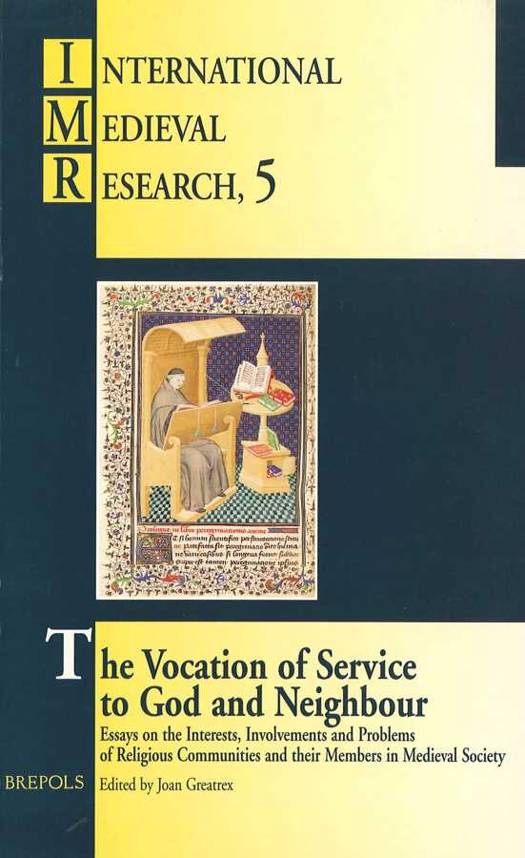
The Vocation of Service to God and Neighbour
Essays on the Interests, Involvements and Problems of Religious Communities and Their Members in Medieval Society
Geoffrey Greatrex *
€ 26,50
+ 53 punten
Omschrijving
The impingement of monastery on marketplace provides the unifying theme for this collection of nine research papers. Separation from the world, for most members of religious orders in the Middle Ages, did not imply isolation from the rest of society but, rather, a new spirituality orientated relationship which took different forms in different times and circumstances. Three of the contributors are concerned with particular aspects of the intellectual activities of the religious orders in both university and cloister. Two others examine the traumatic effects of the enforced return to secular life of thousands of men and women religious in England when monastic life was brought to an abrupt end in 1540. An individual monk's pastoral role among the laity is explored and evaluated in one paper, while another reveals the extent to which a rural English nunnery was both rooted in the local community and dependent on foreign supervision. Problems encountered by the friars are discussed by two other contributors who, on the basis of their recent research, conclude that the hostility between Franciscans and Benedictines has been overstated and that some German Dominicans risked their reputations in their involvement with contemporary heterodox movements among the laity.
Specificaties
Betrokkenen
- Auteur(s):
- Uitgeverij:
Inhoud
- Aantal bladzijden:
- 158
- Taal:
- Engels
- Reeks:
- Reeksnummer:
- nr. 5
Eigenschappen
- Productcode (EAN):
- 9782503507415
- Verschijningsdatum:
- 30/06/1998
- Uitvoering:
- Paperback
- Formaat:
- Trade paperback (VS)
- Afmetingen:
- 157 mm x 243 mm
- Gewicht:
- 294 g


Alleen bij Standaard Boekhandel
+ 53 punten op je klantenkaart van Standaard Boekhandel
Cadeau

AANGERADEN


Beoordelingen
We publiceren alleen reviews die voldoen aan de voorwaarden voor reviews. Bekijk onze voorwaarden voor reviews.