


- Afhalen na 1 uur in een winkel met voorraad
- Gratis thuislevering in België vanaf € 30
- Ruim aanbod met 7 miljoen producten
- Afhalen na 1 uur in een winkel met voorraad
- Gratis thuislevering in België vanaf € 30
- Ruim aanbod met 7 miljoen producten





€ 112,95
+ 225 punten
Eenvoudig bestellen
Veilig betalen


Gratis thuislevering vanaf € 30 (via bpost)
Gratis levering in je Standaard Boekhandel
Omschrijving
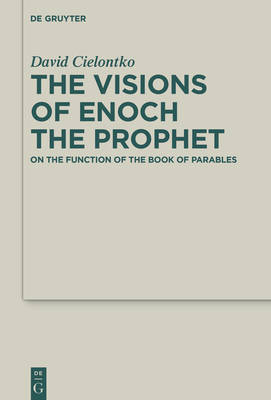
This book examines the function of the Book of Parables (1 Enoch 37-71) in its ancient context. The fi rst part of the volume addresses essential introductory issues, including the textual and redactional history of the Book of Parables, its historical setting, literary features, and the communicative strategies employed by its author. The second part argues that the Book of Parables constructs a symbolic universe that functions as a complex form of legitimation for an audience whose shared social reality is destabilized by experiences of oppression. At the center of this crisis lies a theological problem of justice, as the persecution of the righteous contradicts deeply held expectations of divine protection and blessing. The study interprets the Book of Parables as a body of revealed knowledge that seeks to re-establish the credibility of this threatened social reality. Through a sequence of visionary revelations, the text presents an eschatological reversal of fates as part of God's eternal plan, while cosmological, messianological, and mythic traditions are integrated as essential strategies of legitimation. Together, these elements lend authority to the message and its messenger, enabling the audience to reconcile their lived experience with the conviction that God remains just and decisively on the side of the righteous.
Specificaties
Betrokkenen
- Auteur(s):
- Uitgeverij:
Inhoud
- Aantal bladzijden:
- 298
- Taal:
- Engels
- Reeks:
- Reeksnummer:
- nr. 62
Eigenschappen
- Productcode (EAN):
- 9783111405568
- Verschijningsdatum:
- 2/02/2026
- Uitvoering:
- Hardcover
- Formaat:
- Genaaid
- Afmetingen:
- 156 mm x 234 mm
- Gewicht:
- 598 g


Alleen bij Standaard Boekhandel
+ 225 punten op je klantenkaart van Standaard Boekhandel
CADEAU

AANGERADEN


Beoordelingen
We publiceren alleen reviews die voldoen aan de voorwaarden voor reviews. Bekijk onze voorwaarden voor reviews.