


- Afhalen na 1 uur in een winkel met voorraad
- Gratis thuislevering in België vanaf € 30
- Ruim aanbod met 7 miljoen producten
- Afhalen na 1 uur in een winkel met voorraad
- Gratis thuislevering in België vanaf € 30
- Ruim aanbod met 7 miljoen producten





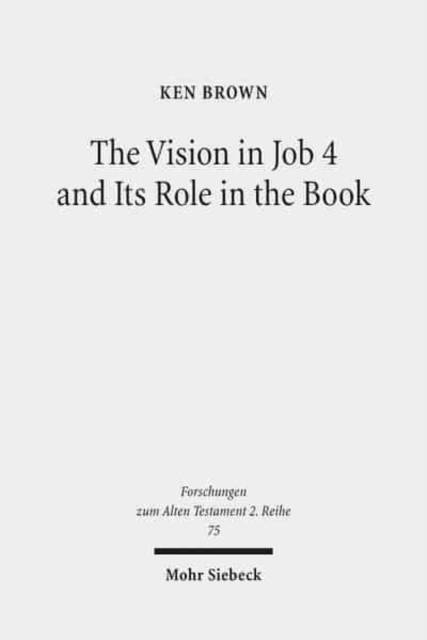
The Vision in Job 4 and Its Role in the Book
Reframing the Development of the Joban Dialogues. Studies of the Sofja Kovalevskaja Research Group on Early Jewish Monotheism. Vol. IV
Ken Brown
€ 107,45
+ 214 punten
Omschrijving
Near the beginning of the Joban Dialogues, Job's friend Eliphaz is attributed a remarkably subversive vision (Job 4:12-21). Laced with images of divine judgment and deception, this vision undermines the very foundation of the friends' theology, and closely conforms to Job's. In particular, the vision's distinctive corporeal imagery and its conclusion that anyone can suddenly perish reflect Job's characteristic style, and form the basis for his accusations of divine injustice. In this study, Ken Brown argues that the tensions between the vision's present attribution to Eliphaz and its role in the dialogue run much deeper than is generally perceived, and can only be resolved through a reassessment of the book's development, both synchronic and diachronic. Brown suggests that the present order of Job 3-4 and 25-27 is neither original nor accidental, but reflects an intentional reframing of the dialogue, and anticipates similar moves across the earliest reception of the book. This work was awarded the Manfred Lautenschlaeger Award for Theological Promise 2016.
Specificaties
Betrokkenen
- Auteur(s):
- Uitgeverij:
Inhoud
- Aantal bladzijden:
- 350
- Taal:
- Engels
- Reeks:
- Reeksnummer:
- nr. 75
Eigenschappen
- Productcode (EAN):
- 9783161535338
- Verschijningsdatum:
- 1/04/2015
- Uitvoering:
- Paperback
- Formaat:
- Trade paperback (VS)
- Afmetingen:
- 155 mm x 231 mm
- Gewicht:
- 544 g


Alleen bij Standaard Boekhandel
+ 214 punten op je klantenkaart van Standaard Boekhandel
Cadeau

AANGERADEN


Beoordelingen
We publiceren alleen reviews die voldoen aan de voorwaarden voor reviews. Bekijk onze voorwaarden voor reviews.