


- Afhalen na 1 uur in een winkel met voorraad
- Gratis thuislevering in België vanaf € 30
- Ruim aanbod met 7 miljoen producten
- Afhalen na 1 uur in een winkel met voorraad
- Gratis thuislevering in België vanaf € 30
- Ruim aanbod met 7 miljoen producten





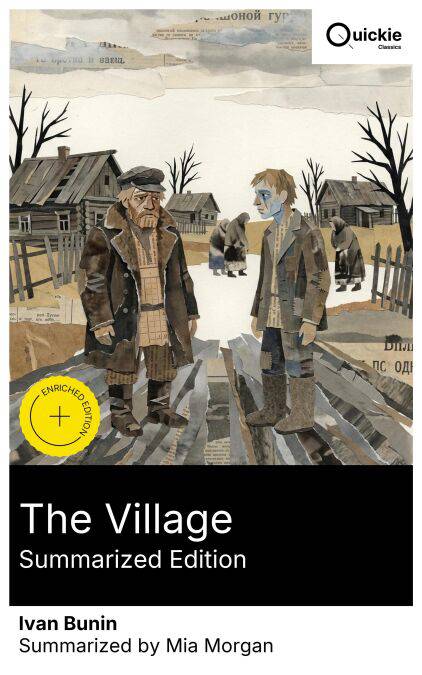
The Village (Summarized Edition) E-BOOK
Enriched edition. Peasant brothers and village life in rural Russia—interwoven relationships, character portraits, and lyrical insight into the human condition
Ivan Bunin
E-book | Engels
€ 1,99
+ 1 punten
Omschrijving
The Village (1910) is Bunin's unsparing panorama of provincial Russia, following the peasant brothers Tikhon and Kuzma through labor, drink, violence, and thwarted hope while the 1905 unrest flickers at the margins. In chiselled, economical prose that blends late-Realist precision with Naturalist determinism, Bunin builds an episodic social anatomy; landscapes, luminous yet indifferent, counterpoint the villagers' brutality and endurance. Born in 1870 to an impoverished Oryol gentry family, Bunin grew up on declining estates, observing peasants without populist filters. A poet and master stylist who revered Tolstoy's clarity yet rejected peasant idealization, he drew on journalism and travel to hone an unsentimental gaze. Written after 1905, the novel codifies his belief that political slogans scarcely reach the village's entrenched misery, hence its scandal on release. This is essential reading for anyone seeking a clear-eyed counterweight to pastoral myth. Students of pre‑revolutionary culture, admirers of Chekhovian understatement tempered by iron, and readers who value style as truth will find it bracing and memorable. Approach it for its artistry; stay for its uncompromising moral witness.
Quickie Classics summarizes timeless works with precision, preserving the author's voice and keeping the prose clear, fast, and readable—distilled, never diluted. Enriched Edition extras: Introduction · Synopsis · Historical Context · Author Biography · Brief Analysis · 4 Reflection Q&As · Editorial Footnotes.
Quickie Classics summarizes timeless works with precision, preserving the author's voice and keeping the prose clear, fast, and readable—distilled, never diluted. Enriched Edition extras: Introduction · Synopsis · Historical Context · Author Biography · Brief Analysis · 4 Reflection Q&As · Editorial Footnotes.
Specificaties
Betrokkenen
- Auteur(s):
- Vertaler(s):
- Uitgeverij:
Inhoud
- Aantal bladzijden:
- 100
- Taal:
- Engels
Eigenschappen
- Productcode (EAN):
- 8596547882169
- Verschijningsdatum:
- 9/01/2026
- Uitvoering:
- E-book
- Beveiligd met:
- Digital watermarking
- Formaat:
- ePub


Alleen bij Standaard Boekhandel
+ 1 punten op je klantenkaart van Standaard Boekhandel
Cadeau

AANGERADEN


Beoordelingen
We publiceren alleen reviews die voldoen aan de voorwaarden voor reviews. Bekijk onze voorwaarden voor reviews.