


- Afhalen na 1 uur in een winkel met voorraad
- Gratis thuislevering in België vanaf € 30
- Ruim aanbod met 7 miljoen producten
- Afhalen na 1 uur in een winkel met voorraad
- Gratis thuislevering in België vanaf € 30
- Ruim aanbod met 7 miljoen producten





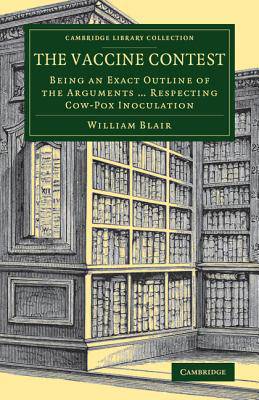
The Vaccine Contest
Being an Exact Outline of the Arguments ... Respecting Cow-Pox Inoculation
William Blair
€ 54,95
+ 109 punten
Omschrijving
When English surgeon William Blair (1766-1822) embarked on his career, he became familiar with the devastation caused by smallpox in urban areas. The virus was lethal to more than a fifth of the people infected, and the rest were at risk of long-term complications. The first effective vaccine against the disease had been developed by Edward Jenner, who had been made aware that smallpox infection was uncommon among milkmaids who had been exposed to a milder form of pox contracted from cows. Although Jenner's vaccine was made available soon after its public announcement in 1798, the objections by various sceptics deterred many from embracing the procedure. In this 1806 pamphlet, Blair employs the format of a dialogue between an anxious parent and an ardent vaccination opponent to convince Londoners of the benefits offered by the new vaccine. His account is complemented by a report from the Royal Jennerian Society.
Specificaties
Betrokkenen
- Auteur(s):
- Uitgeverij:
Inhoud
- Aantal bladzijden:
- 102
- Taal:
- Engels
- Reeks:
Eigenschappen
- Productcode (EAN):
- 9781108078023
- Verschijningsdatum:
- 27/07/2017
- Uitvoering:
- Paperback
- Formaat:
- Trade paperback (VS)
- Afmetingen:
- 140 mm x 216 mm
- Gewicht:
- 140 g


Alleen bij Standaard Boekhandel
+ 109 punten op je klantenkaart van Standaard Boekhandel
Cadeau

AANGERADEN


Beoordelingen
We publiceren alleen reviews die voldoen aan de voorwaarden voor reviews. Bekijk onze voorwaarden voor reviews.