


- Afhalen na 1 uur in een winkel met voorraad
- Gratis thuislevering in België vanaf € 30
- Ruim aanbod met 7 miljoen producten
- Afhalen na 1 uur in een winkel met voorraad
- Gratis thuislevering in België vanaf € 30
- Ruim aanbod met 7 miljoen producten





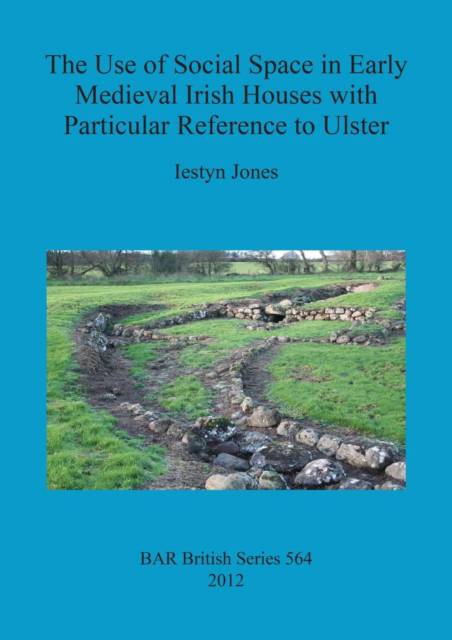
The Use of Social Space in Early Medieval Irish Houses with Particular Reference to Ulster
Iestyn Jones
€ 128,95
+ 257 punten
Eenvoudig bestellen
Veilig betalen


Gratis thuislevering vanaf € 30 (via bpost)
Gratis levering in je Standaard Boekhandel
Omschrijving
This study takes as its subject matter the use of social space in early medieval Irish houses (c. AD 600-1200), with the evidence from the province of Ulster interrogated in more detail. During this period there is a shift from curvilinear to rectilinear house forms. Excavation reports, published and unpublished, have been widely consulted and are the main focus for this research. The Old Irish legal tract Crith Gablach, composed during the earlier part of the early medieval period, is analysed in particular detail with reference to its information about houses and social status. The earlier chapters include a review of earlier research in Ireland and elsewhere including a range of archaeological and anthropological house-related research. Contents: Approaching the house: Introduction; Chapter 2: Literature review: Houses in early medieval Ireland; Chapter 3: Setting the scene: Foreign feet in alien houses; Chapter 4: The excavated early medieval round-houses of Munster, Leinster and Connacht; Chapter 5: The excavated early medieval rectilinear houses of Munster, Leinster and Connacht; Chapter 6: The excavated early medieval round-houses of Ulster, Part 1: Settlements, settings and status; Chapter 7: The excavated early medieval round-houses of Ulster, Part 2: Interiors and function; Chapter 8: The excavated early medieval rectilinear houses of Ulster; Chapter 9: The literary evidence.
Specificaties
Betrokkenen
- Auteur(s):
- Uitgeverij:
Inhoud
- Aantal bladzijden:
- 228
- Taal:
- Engels
- Reeks:
- Reeksnummer:
- nr. 564
Eigenschappen
- Productcode (EAN):
- 9781407310022
- Verschijningsdatum:
- 1/12/2012
- Uitvoering:
- Paperback
- Formaat:
- Trade paperback (VS)
- Afmetingen:
- 210 mm x 297 mm
- Gewicht:
- 743 g


Alleen bij Standaard Boekhandel
+ 257 punten op je klantenkaart van Standaard Boekhandel
CADEAU

AANGERADEN


Beoordelingen
We publiceren alleen reviews die voldoen aan de voorwaarden voor reviews. Bekijk onze voorwaarden voor reviews.