


- Afhalen na 1 uur in een winkel met voorraad
- Gratis thuislevering in België vanaf € 30
- Ruim aanbod met 7 miljoen producten
- Afhalen na 1 uur in een winkel met voorraad
- Gratis thuislevering in België vanaf € 30
- Ruim aanbod met 7 miljoen producten





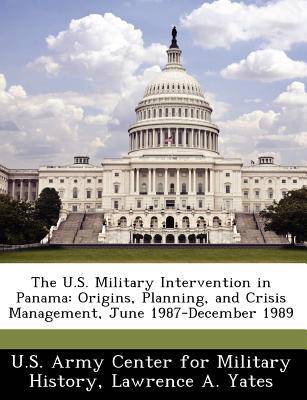
The U.S. Military Intervention in Panama
Origins, Planning, and Crisis Management, June 1987-December 1989
Lawrence A Yates
Paperback | Engels
€ 43,45
+ 86 punten
Uitvoering
Omschrijving
Prior to Operation JUST CAUSE, the December 1989 U.S. intervention in Panama, American leaders had struggled for over two years with the increasingly difficult regime of General Manuel Antonio Noriega. At the time, the Panama Canal was still under U.S. administration with the U.S. Southern Command, based at Quarry Heights, charged with its security. Led by General Frederick Woerner and seconded by Maj. Gen. Bernard Loeffke, the command's Army component commander, American military leaders weathered a series of low-grade crises during 1988-1989, slowly culminating in a growing military confrontation with Noriega's army, militia, and police forces. Detailed in Larry Yates' study are the contingency plans, rules of engagement, and a host of varied operations-security patrols, guard duty, training exercises, shows of force, and police actions-and even the occasional firefight, all of which characterized this trying period. But this history is much more than a precursor to JUST CAUSE. Its true value lies in its careful examination of the complex relationships between a U.S. combatant command, one of the four American global military headquarters, and the command's Washington, D.C., superiors, including Joint Chiefs of Staff Chairman Admiral William Crowe, Army Chief of Staff General Carl Vuono, Defense Secretary Richard Cheney, and President George H. W. Bush. Indeed, the able Woerner and his staff often found themselves walking a tightrope between a variety of ill-defined administration policies whose long-range goals were difficult to fathom and the exigencies of a steadily worsening local situation. The result is a rich mix of timeless experiences and insights especially attuned to the contingency fare so common in the post-Cold War era.
Specificaties
Betrokkenen
- Auteur(s):
- Uitgeverij:
Inhoud
- Aantal bladzijden:
- 334
- Taal:
- Engels
Eigenschappen
- Productcode (EAN):
- 9781249497141
- Verschijningsdatum:
- 24/09/2012
- Uitvoering:
- Paperback
- Formaat:
- Trade paperback (VS)
- Afmetingen:
- 189 mm x 246 mm
- Gewicht:
- 598 g


Alleen bij Standaard Boekhandel
+ 86 punten op je klantenkaart van Standaard Boekhandel
Cadeau

AANGERADEN


Beoordelingen
We publiceren alleen reviews die voldoen aan de voorwaarden voor reviews. Bekijk onze voorwaarden voor reviews.