


- Afhalen na 1 uur in een winkel met voorraad
- Gratis thuislevering in België vanaf € 30
- Ruim aanbod met 7 miljoen producten
- Afhalen na 1 uur in een winkel met voorraad
- Gratis thuislevering in België vanaf € 30
- Ruim aanbod met 7 miljoen producten





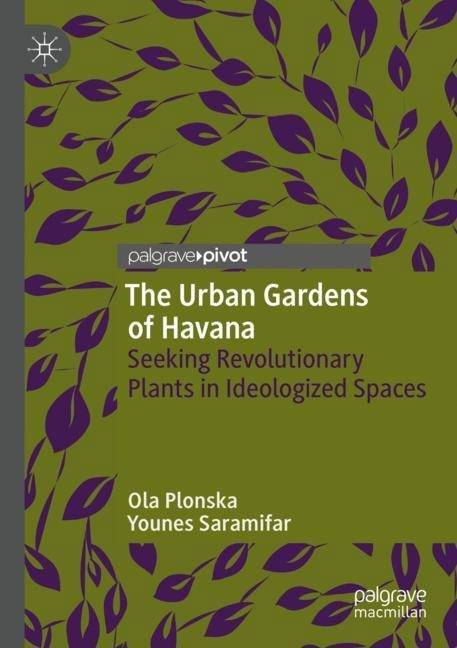
The Urban Gardens of Havana
Seeking Revolutionary Plants in Ideologized Spaces
Ola Plonska, Younes Saramifar
Paperback | Engels
€ 53,45
+ 106 punten
Uitvoering
Omschrijving
This book relates stories of everyday life revolving around small-scale urban gardens in Central Havana and focusing particularly on that of Marcelo, a seventy-four-year-old revolutionary and gardener. The urban gardens are contested spaces: though monitored and controlled by Cuban state institutions, they also offer possibilities of crafting life in resistance. The experiences the authors narrate are not 'thick descriptions,' linked to larger political issues, but rather rhizomatic observations that highlight the relationships between humans and non-humans within the nature-culture debate. Using these experiences, the authors argue that 'the political' reaches beyond the affairs of state and governance and should be seen as an all-encompassing part of life. The authors thereby invite the social sciences to focus on the microscopic and the day-to-day to illuminate how the political affairs of lives can be imagined differently.
Specificaties
Betrokkenen
- Auteur(s):
- Uitgeverij:
Inhoud
- Taal:
- Engels
Eigenschappen
- Productcode (EAN):
- 9783030126599
- Uitvoering:
- Paperback
- Afmetingen:
- 148 mm x 8 mm
- Gewicht:
- 168 g


Alleen bij Standaard Boekhandel
+ 106 punten op je klantenkaart van Standaard Boekhandel
Cadeau

AANGERADEN


Beoordelingen
We publiceren alleen reviews die voldoen aan de voorwaarden voor reviews. Bekijk onze voorwaarden voor reviews.