


- Afhalen na 1 uur in een winkel met voorraad
- Gratis thuislevering in België vanaf € 30
- Ruim aanbod met 7 miljoen producten
- Afhalen na 1 uur in een winkel met voorraad
- Gratis thuislevering in België vanaf € 30
- Ruim aanbod met 7 miljoen producten





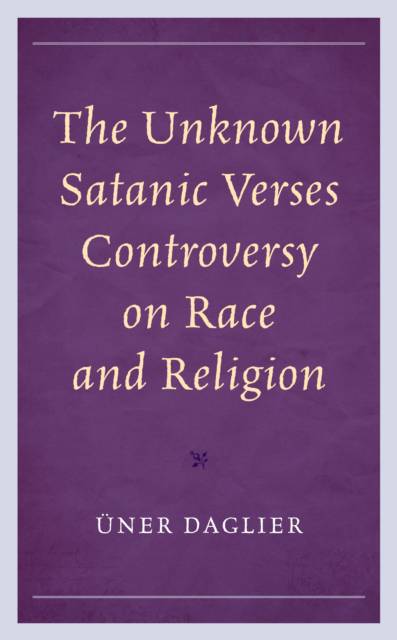
The Unknown Satanic Verses Controversy on Race and Religion
Üner Daglier
€ 79,95
+ 159 punten
Uitvoering
Eenvoudig bestellen
Veilig betalen


Gratis thuislevering vanaf € 30 (via bpost)
Gratis levering in je Standaard Boekhandel
Omschrijving
The worldwide controversy surrounding its first publication in 1988 and concurrent death threat against its author, Salman Rushdie, paradoxically led to a narrow understanding of The Satanic Verses, which focused on whether it is insulting to Islam and whether it should be banned. And despite piecemeal attention to its epistemic intricacies by students of postcolonial literature in the aftermath, The Satanic Verses' essential opacity has never been sufficiently met. The Unknown Satanic Verses Controversy on Race and Religion now responds to this gap through painstakingly detailed attention to the totality of Rushdie's text. Indeed it uniquely approaches The Satanic Verses' attempt to mythicize race and migration, on the one hand, and secularize religion and Islam, on the other, from a perspective informed by the perennial debate on religion and politics, esoteric or coded writing in the history of political thought, especially in times of persecution, and Islamic criticism in contemporary world literature. Üner Daglier's findings accord with another layer of interpretation that emphasizes Rushdie's across-the-board critique of racial prejudice, penchant for cultural eclecticism, and bitterly skeptical treatment of the foundations of Submission and proposal for feminist Islamic reform, as the antidote for entrenched misogyny, in a world where philosophy is for the rare and religion for the many. They further convey Rushdie's constant preoccupation with the nature of miracles and postmodern case for intersubjectivity as a criterion for openness to their validity.
Specificaties
Betrokkenen
- Auteur(s):
- Uitgeverij:
Inhoud
- Aantal bladzijden:
- 178
- Taal:
- Engels
- Reeks:
Eigenschappen
- Productcode (EAN):
- 9781793600059
- Verschijningsdatum:
- 21/12/2021
- Uitvoering:
- Paperback
- Formaat:
- Trade paperback (VS)
- Afmetingen:
- 152 mm x 229 mm
- Gewicht:
- 267 g



Alleen bij Standaard Boekhandel
+ 159 punten op je klantenkaart van Standaard Boekhandel
CADEAU

AANGERADEN


Beoordelingen
We publiceren alleen reviews die voldoen aan de voorwaarden voor reviews. Bekijk onze voorwaarden voor reviews.