


- Afhalen na 1 uur in een winkel met voorraad
- Gratis thuislevering in België vanaf € 30
- Ruim aanbod met 7 miljoen producten
- Afhalen na 1 uur in een winkel met voorraad
- Gratis thuislevering in België vanaf € 30
- Ruim aanbod met 7 miljoen producten





€ 64,45
+ 128 punten
Omschrijving
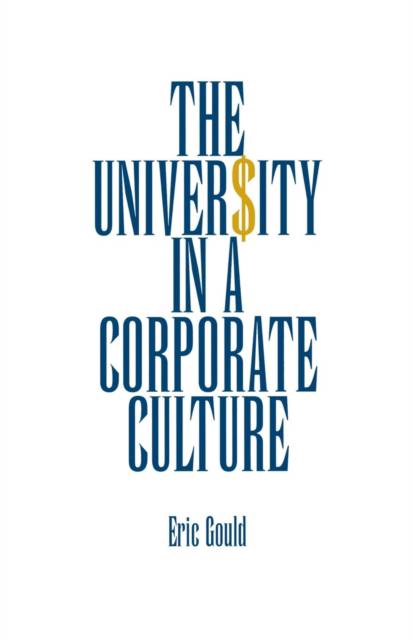
Over the past century, higher education in the United States has developed an increasingly powerful corporate ethos, as institutions compete for students, faculty, and funding. This book examines how the liberal democratic principles driving higher education often conflict with market pressures to credential students and offer knowledge that has a clear exchange value. Eric Gould, who has been both academician and college administrator, argues that the failure to structure the curriculum so that it integrates responsible social idealism and humanism with economic and cultural needs constitutes the moral crisis of the university. Gould analyzes the economics and politics of higher education, showing how student consumerism, culture wars, faculty alienation, trustee activism, and a split between the concepts of "culture" and "society" have all resulted from the unholy alliance between pragmatism, corporatism, and liberalism in higher education. He asserts that what is needed is a general education for undergraduates that promotes the ability to critique power relations (including those within higher education) so that students can understand how social forces-and their embodiment of ideas, ideologies, and claims for truth-shape contemporary public philosophy.
Specificaties
Betrokkenen
- Auteur(s):
- Uitgeverij:
Inhoud
- Aantal bladzijden:
- 272
- Taal:
- Engels
Eigenschappen
- Productcode (EAN):
- 9780300209075
- Verschijningsdatum:
- 15/03/2014
- Uitvoering:
- Paperback
- Formaat:
- Trade paperback (VS)
- Afmetingen:
- 140 mm x 216 mm
- Gewicht:
- 340 g


Alleen bij Standaard Boekhandel
+ 128 punten op je klantenkaart van Standaard Boekhandel
Cadeau

AANGERADEN


Beoordelingen
We publiceren alleen reviews die voldoen aan de voorwaarden voor reviews. Bekijk onze voorwaarden voor reviews.