


- Afhalen na 1 uur in een winkel met voorraad
- Gratis thuislevering in België vanaf € 30
- Ruim aanbod met 7 miljoen producten
- Afhalen na 1 uur in een winkel met voorraad
- Gratis thuislevering in België vanaf € 30
- Ruim aanbod met 7 miljoen producten





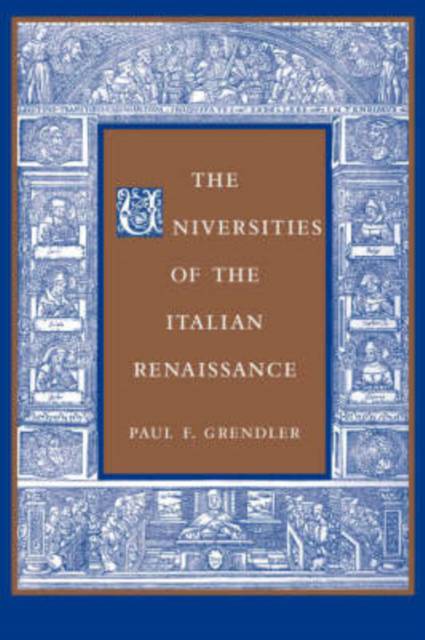
The Universities of the Italian Renaissance
Paul F Grendler
€ 59,95
+ 119 punten
Omschrijving
The Italian university has been credited with the rebirth of humanism and thus the flourishing of the Renaissance as we have come to understand it. Scholars of Italian humanism acknowledge the importance of the legal curriculum at universities in Pisa and Bologna for the rediscovery and renewed appreciation of classical texts. Few, however, have examined what life or the curriculum were like at Italian universities in general, in both major and minor city-states. This study, covering the period from 1400-1600, offers historians in the field not only an overview but also detailed information on the life of these Renaissance universities. According to the author, this book addresses Italian universities of the Renaissance in two complementary ways. It follows in broad lines the changes in various academic disciplines, as new issues and themes appeared and older ones waned. It also notes changes in the organization of the university, such as the creation of professorships in new subjects and their elimination in older ones. The impact of scholars in their disciplines in many cases depended on the structural changes their university was willing to make to accommodate new lines of inquiry. The book studies all sixteen of the leading Italian universities. Part I charts the rise and flourishing of Italian universities as institutions. Part II looks at their curricula, teaching methods, and research conducted by university professors. Part III explains the decline of the Renaissance university.
Specificaties
Betrokkenen
- Auteur(s):
- Uitgeverij:
Inhoud
- Aantal bladzijden:
- 616
- Taal:
- Engels
- Reeks:
Eigenschappen
- Productcode (EAN):
- 9780801880551
- Verschijningsdatum:
- 29/09/2004
- Uitvoering:
- Paperback
- Formaat:
- Trade paperback (VS)
- Afmetingen:
- 163 mm x 233 mm
- Gewicht:
- 816 g



Alleen bij Standaard Boekhandel
+ 119 punten op je klantenkaart van Standaard Boekhandel
Cadeau

AANGERADEN


Beoordelingen
We publiceren alleen reviews die voldoen aan de voorwaarden voor reviews. Bekijk onze voorwaarden voor reviews.