


- Afhalen na 1 uur in een winkel met voorraad
- Gratis thuislevering in België vanaf € 30
- Ruim aanbod met 7 miljoen producten
- Afhalen na 1 uur in een winkel met voorraad
- Gratis thuislevering in België vanaf € 30
- Ruim aanbod met 7 miljoen producten





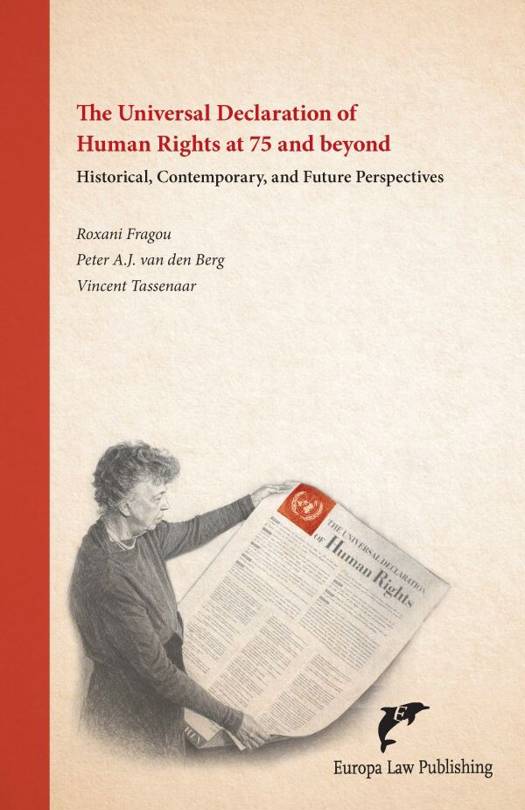
The Universal Declaration of Human Rights at 75 and beyond: historical, contempary, and future perspectives
Roxani Fragou, Peter A.J. van den Berg, Vincent Tassenaar
Paperback | Nederlands
€ 62,50
+ 125 punten
Omschrijving
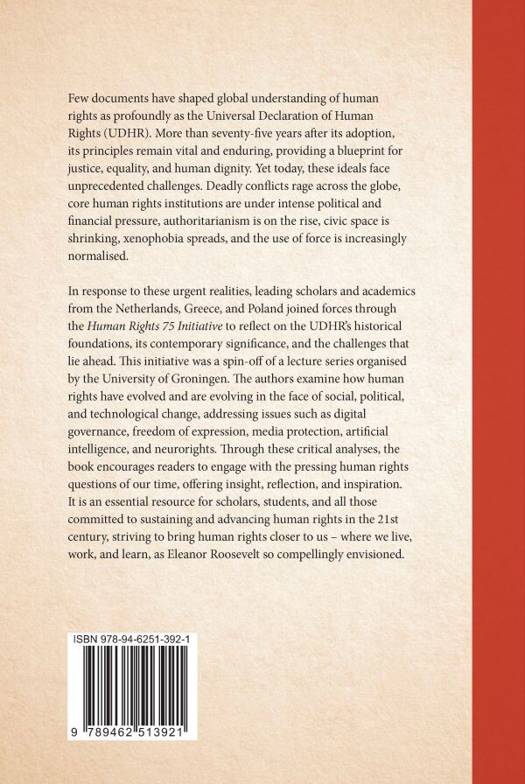
Few documents have shaped global understanding of human rights as profoundly as the Universal Declaration of Human Rights (UDHR). More than seventy-five years after its adoption, its principles remain vital and enduring, providing a blueprint for justice, equality, and human dignity. Yet today, these ideals face unprecedented challenges. Deadly conflicts rage across the globe, core human rights institutions are under intense political and financial pressure, authoritarianism is on the rise, civic space is shrinking, xenophobia spreads, and the use of force is increasingly normalised. In response to these urgent realities, leading scholars and academics from the Netherlands, Greece, and Poland joined forces through the Human Rights 75 Initiative to reflect on the UDHR’s historical foundations, its contemporary significance, and the challenges that lie ahead. This initiative was a spin-off of a lecture series organized by the University of Groningen. The authors examine how human rights have evolved and are evolving in the face of social, political, and technological change, addressing issues such as digital governance, freedom of expression, media protection, artificial intelligence, and neurorights. Through these critical analyses, the book encourages readers to engage with the pressing human rights questions of our time, offering insight, reflection, and inspiration. It is an essential resource for scholars, students, and all those committed to sustaining and advancing human rights in the 21st century, striving to bring human rights closer to us – where we live, work, and learn, as Eleanor Roosevelt so compellingly envisioned.
Specificaties
Betrokkenen
- Auteur(s):
- Uitgeverij:
Inhoud
- Aantal bladzijden:
- 250
- Taal:
- Nederlands
Eigenschappen
- Productcode (EAN):
- 9789462513921
- Verschijningsdatum:
- 10/02/2026
- Uitvoering:
- Paperback
- Afmetingen:
- 158 mm x 242 mm
- Gewicht:
- 462 g



Alleen bij Standaard Boekhandel
+ 125 punten op je klantenkaart van Standaard Boekhandel
Cadeau

AANGERADEN


Beoordelingen
We publiceren alleen reviews die voldoen aan de voorwaarden voor reviews. Bekijk onze voorwaarden voor reviews.