


- Afhalen na 1 uur in een winkel met voorraad
- Gratis thuislevering in België vanaf € 30
- Ruim aanbod met 7 miljoen producten
- Afhalen na 1 uur in een winkel met voorraad
- Gratis thuislevering in België vanaf € 30
- Ruim aanbod met 7 miljoen producten





€ 17,69
+ 17 punten
Uitvoering
Eenvoudig bestellen
Veilig betalen


Onmiddellijk geleverd via e-mail
Omschrijving
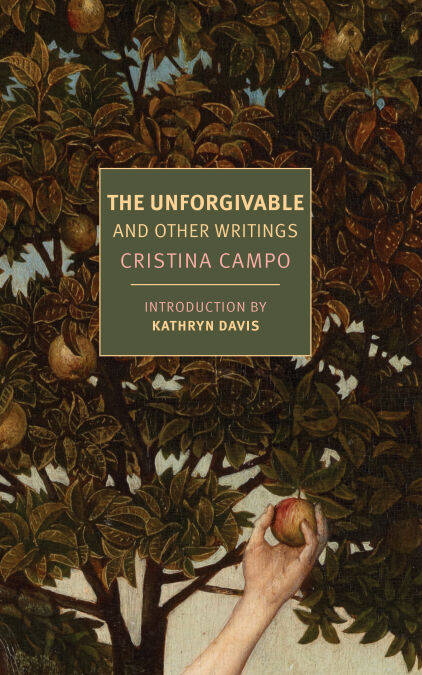
Thrilling, stylish essays about everything from flying carpets and Doctor Zhivago to God and Shakespeare, by a rediscovered Italian writer.
Christina Campo published only two short collections of essays in her lifetime: Fairy Tale and Mystery (1962) and The Flute and the Carpet (1971). The Unforgivable and Other Writings brings together both volumes, along with a selection of essays on literature and an autobiographical short story, offering readers of English the first full-length portrait of a writer who has long been admired in Italy and abroad.
Campo's subjects range from the canonical to the esoteric. She writes stylishly about Shakespeare and Doctor Zhivago, as well as flying carpets, sprezzatura, and the theophagic origins of the Latin liturgy. Her passion for Marianne Moore and T. S. Eliot makes her a modernist, but like these American counterparts she is a modernist preoccupied by the deep past and by her desire to escape from personality through sustained attention to form. For Campo, writing was a spiritual discipline, and her sentences are at once wonderfully and wildly alive and serenely self-effacing. "I have written little," she once said, "and would like to have written less."
Christina Campo published only two short collections of essays in her lifetime: Fairy Tale and Mystery (1962) and The Flute and the Carpet (1971). The Unforgivable and Other Writings brings together both volumes, along with a selection of essays on literature and an autobiographical short story, offering readers of English the first full-length portrait of a writer who has long been admired in Italy and abroad.
Campo's subjects range from the canonical to the esoteric. She writes stylishly about Shakespeare and Doctor Zhivago, as well as flying carpets, sprezzatura, and the theophagic origins of the Latin liturgy. Her passion for Marianne Moore and T. S. Eliot makes her a modernist, but like these American counterparts she is a modernist preoccupied by the deep past and by her desire to escape from personality through sustained attention to form. For Campo, writing was a spiritual discipline, and her sentences are at once wonderfully and wildly alive and serenely self-effacing. "I have written little," she once said, "and would like to have written less."
Specificaties
Betrokkenen
- Auteur(s):
- Vertaler(s):
- Uitgeverij:
Inhoud
- Aantal bladzijden:
- 288
- Taal:
- Engels
Eigenschappen
- Productcode (EAN):
- 9781681378039
- Verschijningsdatum:
- 5/02/2024
- Uitvoering:
- E-book
- Beveiligd met:
- Adobe DRM
- Formaat:
- ePub


Alleen bij Standaard Boekhandel
+ 17 punten op je klantenkaart van Standaard Boekhandel
CADEAU

AANGERADEN


Beoordelingen
We publiceren alleen reviews die voldoen aan de voorwaarden voor reviews. Bekijk onze voorwaarden voor reviews.