


- Afhalen na 1 uur in een winkel met voorraad
- Gratis thuislevering in België vanaf € 30
- Ruim aanbod met 7 miljoen producten
- Afhalen na 1 uur in een winkel met voorraad
- Gratis thuislevering in België vanaf € 30
- Ruim aanbod met 7 miljoen producten





Omschrijving
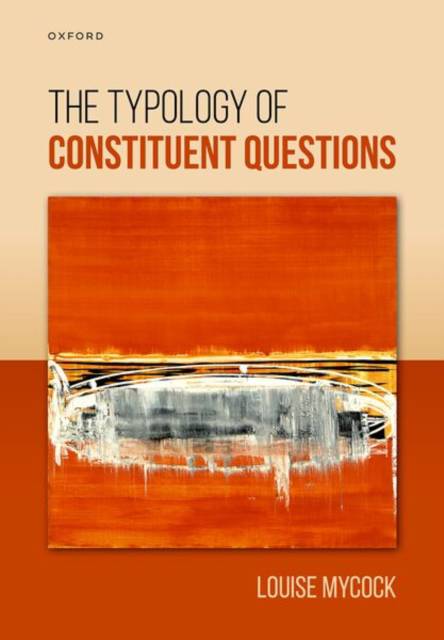
This book explores and analyses the typology of constituent ('wh') questions within the non-derivational framework of Lexical-Functional Grammar (LFG). Part I examines fundamental features of constituent questions, focusing on syntax, semantics, information structure, and prosody. The chapters examine the roles of syntax and prosody in encoding information structure status and delimiting interrogative scope, and consider how these aspects of linguistic structure and their interfaces are modelled in LFG. Part II turns to the syntax and prosody of constituent questions in three case-study languages, each exemplifying a distinct constituent question formation strategy: in situ (Japanese), ex situ (Hungarian), and combined ex situ and in situ (English). One chapter also considers a further possibility for constituent question formation, namely scope marking constructions, exemplified by the Q-marking construction (partial 'wh' movement) in Hungarian and the bare Q-scope construction (bare scope marking) in Malay. Along with clausal pied-piping, these constructions are analysed as constituent questions that include a question clause rather than some other type of question expression. Drawing on data from a variety of languages, Part III explores wider issues relating to the typology of constituent questions: variation within and across languages in terms of the formation strategies available, optionality, and constraints. What emerges is a view of the typological space that is built on the acknowledgement of the roles that syntactic and non-syntactic aspects of linguistic structure can play in constituent question formation, which in turn provides a more complete understanding of constituent questions cross-linguistically.
Specificaties
Betrokkenen
- Auteur(s):
- Uitgeverij:
Inhoud
- Aantal bladzijden:
- 384
- Taal:
- Engels
Eigenschappen
- Productcode (EAN):
- 9780199589999
- Verschijningsdatum:
- 23/10/2026
- Uitvoering:
- Hardcover
- Formaat:
- Genaaid
- Afmetingen:
- 171 mm x 246 mm



Alleen bij Standaard Boekhandel
+ 382 punten op je klantenkaart van Standaard Boekhandel
AANGERADEN


Beoordelingen
We publiceren alleen reviews die voldoen aan de voorwaarden voor reviews. Bekijk onze voorwaarden voor reviews.