


- Afhalen na 1 uur in een winkel met voorraad
- Gratis thuislevering in België vanaf € 30
- Ruim aanbod met 7 miljoen producten
- Afhalen na 1 uur in een winkel met voorraad
- Gratis thuislevering in België vanaf € 30
- Ruim aanbod met 7 miljoen producten





€ 22,45
+ 44 punten
Omschrijving
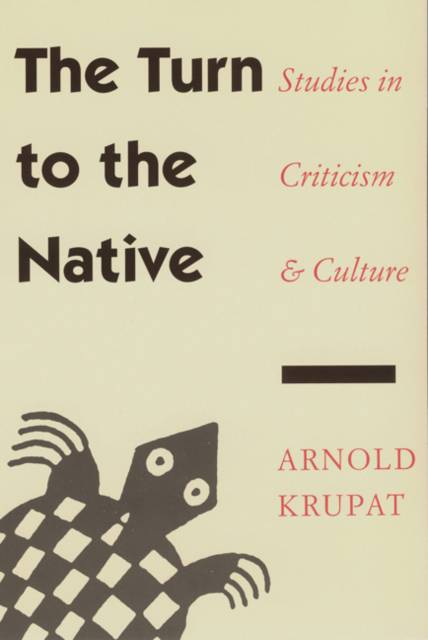
The Turn to the Native is a timely account of Native American literature and the critical writings that have grown up around it. Arnold Krupat considers racial and cultural "essentialism," the ambiguous position of non-Native critics in the field, cultural "sovereignty" and "property," and the place of Native American culture in a so-called multicultural era. Chapters follow on the relationship of Native American culture to postcolonial writing and postmodernism. Krupat comments on the recent work of numerous Native writers. The final chapter, "A Nice Jewish Boy among the Indians," presents the author's effort to balance his Jewish and working-class heritage, his adherence to Western "critical" ideals, and his ongoing loyalty to the values of Native cultures.
Specificaties
Betrokkenen
- Auteur(s):
- Uitgeverij:
Inhoud
- Aantal bladzijden:
- 149
- Taal:
- Engels
Eigenschappen
- Productcode (EAN):
- 9780803277861
- Verschijningsdatum:
- 1/09/1998
- Uitvoering:
- Paperback
- Formaat:
- Trade paperback (VS)
- Afmetingen:
- 153 mm x 227 mm
- Gewicht:
- 244 g


Alleen bij Standaard Boekhandel
+ 44 punten op je klantenkaart van Standaard Boekhandel
Cadeau

AANGERADEN


Beoordelingen
We publiceren alleen reviews die voldoen aan de voorwaarden voor reviews. Bekijk onze voorwaarden voor reviews.