


- Afhalen na 1 uur in een winkel met voorraad
- Gratis thuislevering in België vanaf € 30
- Ruim aanbod met 7 miljoen producten
- Afhalen na 1 uur in een winkel met voorraad
- Gratis thuislevering in België vanaf € 30
- Ruim aanbod met 7 miljoen producten





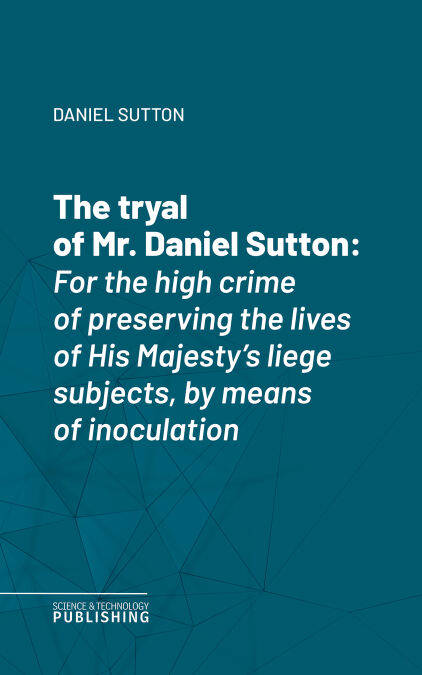
The tryal of Mr. Daniel Sutton E-BOOK
For the high crime of preserving the lives of His Majesty's liege subjects, by means of inoculation
Sutton
E-book | Engels
€ 19,99
+ 19 punten
Eenvoudig bestellen
Veilig betalen


Onmiddellijk geleverd via e-mail
Omschrijving
The Tryal of Mr. Daniel Sutton For the High Crime of Preserving the Lives of His Majesty's Liege Subjects, by Means of Inoculation is a satirical pamphlet first published in 1770, chronicling the mock trial of Daniel Sutton, a pioneering English surgeon renowned for his innovative and controversial work in smallpox inoculation. Set against the backdrop of 18th-century England, the book humorously exposes the resistance Sutton faced from both the medical establishment and the public, who were suspicious of the new practice of variolation—a precursor to vaccination. Through witty dialogue and biting irony, the narrative presents Sutton as a defendant accused of the crime of saving lives, highlighting the absurdity of prosecuting someone for advancing public health. The pamphlet unfolds as a courtroom drama, with Sutton's accusers representing the entrenched interests of traditional medicine and superstition, while his defenders champion reason, science, and humanitarian progress. The proceedings are laced with clever arguments, satirical jabs at medical conservatism, and pointed commentary on the social and political climate of the time. The work not only documents Sutton's contributions to the fight against smallpox but also serves as a broader critique of society's reluctance to embrace scientific innovation. Rich in period detail and sharp in its social commentary, The Tryal of Mr. Daniel Sutton offers readers a fascinating glimpse into the history of medicine, the challenges faced by early medical pioneers, and the enduring struggle between progress and tradition. It stands as both a historical document and a timeless satire on the resistance to change, making it a compelling read for those interested in medical history, social commentary, and the evolution of public health.
Specificaties
Betrokkenen
- Auteur(s):
- Uitgeverij:
Inhoud
- Taal:
- Engels
Eigenschappen
- Productcode (EAN):
- 9782528120774
- Verschijningsdatum:
- 31/08/2025
- Uitvoering:
- E-book
- Formaat:
- ePub



Alleen bij Standaard Boekhandel
+ 19 punten op je klantenkaart van Standaard Boekhandel
CADEAU

AANGERADEN


Beoordelingen
We publiceren alleen reviews die voldoen aan de voorwaarden voor reviews. Bekijk onze voorwaarden voor reviews.