



Bedankt voor het vertrouwen het afgelopen jaar! Om jou te bedanken bieden we GRATIS verzending (in België) aan op alles gedurende de hele maand januari.
- Afhalen na 1 uur in een winkel met voorraad
- In januari gratis thuislevering in België
- Ruim aanbod met 7 miljoen producten
Bedankt voor het vertrouwen het afgelopen jaar! Om jou te bedanken bieden we GRATIS verzending (in België) aan op alles gedurende de hele maand januari.
- Afhalen na 1 uur in een winkel met voorraad
- In januari gratis thuislevering in België
- Ruim aanbod met 7 miljoen producten





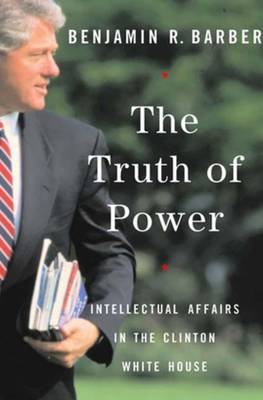
The Truth of Power
Intellectual Affairs in the Clinton White House
Benjamin R Barber
Paperback | Engels
€ 36,95
+ 73 punten
Omschrijving
President Clinton had a romance with big ideas. He intently cultivated intellectuals, seducing them with his characteristic charm and with the promise of real influence on the political stage. Yet most often he disappointed the big thinkers whose advice he sought.
Benjamin Barber was first invited to Camp David in 1994, along with other prominent members of the academic community, to participate in a "seminar" with President Clinton on the future of Democratic ideas and ideals. Afterwards, he became a steady informal adviser to the White House. For a politically committed professor like Barber, the opportunity was exhilarating--here was an opportunity to put ideas into action, to link ideas to power. The result was enlightening, if unexpected. The most unpredictable factor was the president himself: a man of astonishing intellectual gifts, a consummate listener and synthesizer of ideas, who nonetheless failed to present a stirring progressive vision or even to craft a memorable speech.
With great perceptiveness, wit, and élan, Barber provides a startling meditation on truth and power--and the truth of power, which is the responsibility of the elected not to an idea but to the electorate. He identifies the fault lines that future progressive candidates must straddle if they are to win--and the gift they must have, if they are to be great, of calling forth the best in their fellow citizens. In the end, Barber give us a unique portrait of our compelling and maddening ex-president, and the hopes and disillusionments he represents.
Benjamin Barber was first invited to Camp David in 1994, along with other prominent members of the academic community, to participate in a "seminar" with President Clinton on the future of Democratic ideas and ideals. Afterwards, he became a steady informal adviser to the White House. For a politically committed professor like Barber, the opportunity was exhilarating--here was an opportunity to put ideas into action, to link ideas to power. The result was enlightening, if unexpected. The most unpredictable factor was the president himself: a man of astonishing intellectual gifts, a consummate listener and synthesizer of ideas, who nonetheless failed to present a stirring progressive vision or even to craft a memorable speech.
With great perceptiveness, wit, and élan, Barber provides a startling meditation on truth and power--and the truth of power, which is the responsibility of the elected not to an idea but to the electorate. He identifies the fault lines that future progressive candidates must straddle if they are to win--and the gift they must have, if they are to be great, of calling forth the best in their fellow citizens. In the end, Barber give us a unique portrait of our compelling and maddening ex-president, and the hopes and disillusionments he represents.
Specificaties
Betrokkenen
- Auteur(s):
- Uitgeverij:
Inhoud
- Aantal bladzijden:
- 322
- Taal:
- Engels
Eigenschappen
- Productcode (EAN):
- 9780393323320
- Verschijningsdatum:
- 1/08/2001
- Uitvoering:
- Paperback
- Formaat:
- Trade paperback (VS)
- Afmetingen:
- 152 mm x 229 mm
- Gewicht:
- 471 g


Alleen bij Standaard Boekhandel
+ 73 punten op je klantenkaart van Standaard Boekhandel
SOLDEN


Beoordelingen
We publiceren alleen reviews die voldoen aan de voorwaarden voor reviews. Bekijk onze voorwaarden voor reviews.