


- Afhalen na 1 uur in een winkel met voorraad
- Gratis thuislevering in België vanaf € 30
- Ruim aanbod met 7 miljoen producten
- Afhalen na 1 uur in een winkel met voorraad
- Gratis thuislevering in België vanaf € 30
- Ruim aanbod met 7 miljoen producten





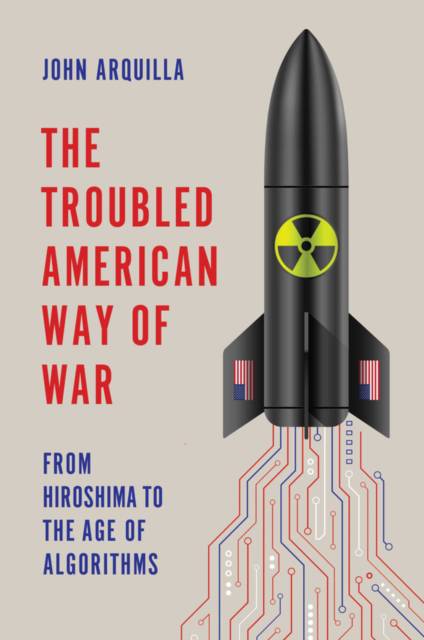
The Troubled American Way of War
From Hiroshima to the Age of Algorithms
John Arquilla
Hardcover | Engels
€ 33,45
+ 66 punten
Omschrijving
Since the end of World War II, the United States has been the world's preeminent military power. Yet it has suffered as much failure as it has experienced victory. The bloody stalemate in Korea, defeats in Vietnam and Afghanistan, and difficulties fighting Iraqi insurgents, reflect persistent problems with U.S. military strategy. Beyond these conflicts, soldiers and civilian analysts have flirted, since Hiroshima, with highly dangerous ideas about waging and winning a nuclear war.
In this astute critique, leading defense expert John Arquilla identifies the blind spots preventing the U.S. from achieving sustained military success. Drawing on a range of sources, including high-level insiders, he argues that the U.S. has fixated on three aspects of military affairs - strategic air power, nuclear weaponry, and informational/computational analytics - to its detriment and at the expense of effective innovation. This matters not only for the U.S. and its allies, but for its broader impact on the future of war.
Given the continuing challenges posed by insurgents and terrorists, a new round of great-power competition, and increasing reliance on AI, the troubled American way of war urgently needs redesigning. At stake is the stability and security of global order.
In this astute critique, leading defense expert John Arquilla identifies the blind spots preventing the U.S. from achieving sustained military success. Drawing on a range of sources, including high-level insiders, he argues that the U.S. has fixated on three aspects of military affairs - strategic air power, nuclear weaponry, and informational/computational analytics - to its detriment and at the expense of effective innovation. This matters not only for the U.S. and its allies, but for its broader impact on the future of war.
Given the continuing challenges posed by insurgents and terrorists, a new round of great-power competition, and increasing reliance on AI, the troubled American way of war urgently needs redesigning. At stake is the stability and security of global order.
Specificaties
Betrokkenen
- Auteur(s):
- Uitgeverij:
Inhoud
- Aantal bladzijden:
- 226
- Taal:
- Engels
Eigenschappen
- Productcode (EAN):
- 9781509560905
- Verschijningsdatum:
- 29/06/2026
- Uitvoering:
- Hardcover
- Formaat:
- Genaaid


Alleen bij Standaard Boekhandel
+ 66 punten op je klantenkaart van Standaard Boekhandel

Beoordelingen
We publiceren alleen reviews die voldoen aan de voorwaarden voor reviews. Bekijk onze voorwaarden voor reviews.