


- Afhalen na 1 uur in een winkel met voorraad
- Gratis thuislevering in België vanaf € 30
- Ruim aanbod met 7 miljoen producten
- Afhalen na 1 uur in een winkel met voorraad
- Gratis thuislevering in België vanaf € 30
- Ruim aanbod met 7 miljoen producten





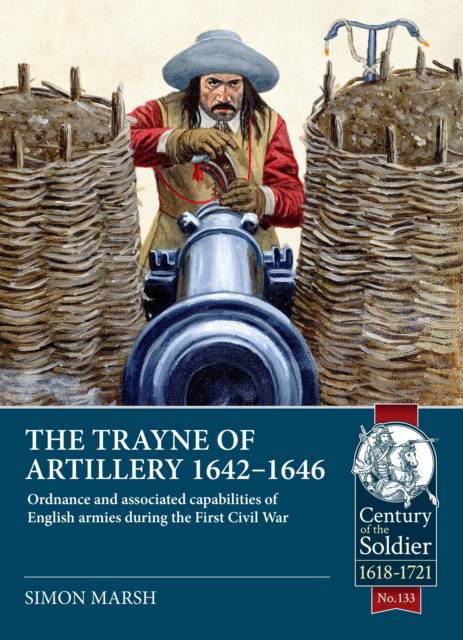
The Trayne of Artillery 1642-1646
Ordnance and Associated Capabilities of English Armies During the First Civil War
Simon Marsh
€ 48,95
+ 97 punten
Omschrijving
Artillery trains are a neglected aspect of Civil War military history; despite the rich archival legacy they have left behind. Some historians have dismissed them as having little impact in battle, while conceding their utility in siege warfare. The Trayne of Artillery 1642-1646 seeks to challenge this perception and to ensure that the importance of ordnance trains to Civil War armies is more widely recognised.
Drawing upon previously unpublished archival material alongside a wide range of other sources, The Trayne of Artillery 1642-1646 examines the organisation, equipping, and employment of artillery. It explores contemporary ordnance doctrine as articulated by military writers and compares this theoretical framework with evidence drawn from written accounts, offering a comprehensive understanding of operational practice and highlighting areas where practice diverged from theory.
For the first time in a single volume, The Trayne of Artillery 1642-1646 provides a detailed examination of the principal artillery trains established by both Parliamentarian and Royalist forces, including those of the Earl of Essex, the Earl of Manchester, Sir William Waller, the Royalist Oxford army, and the New Model Army. It also investigates the smaller artillery trains raised by regional forces, presenting as complete a picture as possible of this often overlooked and misunderstood subject.
The Trayne of Artillery 1642-1646 will appeal to military historians of the British Civil Wars, as well as to readers with an interest in the development and operation of the ordnance arm of service. Wargamers and re-enactors will also find much of value in this volume.
Drawing upon previously unpublished archival material alongside a wide range of other sources, The Trayne of Artillery 1642-1646 examines the organisation, equipping, and employment of artillery. It explores contemporary ordnance doctrine as articulated by military writers and compares this theoretical framework with evidence drawn from written accounts, offering a comprehensive understanding of operational practice and highlighting areas where practice diverged from theory.
For the first time in a single volume, The Trayne of Artillery 1642-1646 provides a detailed examination of the principal artillery trains established by both Parliamentarian and Royalist forces, including those of the Earl of Essex, the Earl of Manchester, Sir William Waller, the Royalist Oxford army, and the New Model Army. It also investigates the smaller artillery trains raised by regional forces, presenting as complete a picture as possible of this often overlooked and misunderstood subject.
The Trayne of Artillery 1642-1646 will appeal to military historians of the British Civil Wars, as well as to readers with an interest in the development and operation of the ordnance arm of service. Wargamers and re-enactors will also find much of value in this volume.
Specificaties
Betrokkenen
- Auteur(s):
- Uitgeverij:
Inhoud
- Aantal bladzijden:
- 314
- Taal:
- Engels
- Reeks:
Eigenschappen
- Productcode (EAN):
- 9781804518403
- Verschijningsdatum:
- 13/03/2026
- Uitvoering:
- Paperback
- Formaat:
- Trade paperback (VS)
- Afmetingen:
- 180 mm x 246 mm
- Gewicht:
- 680 g


Alleen bij Standaard Boekhandel
+ 97 punten op je klantenkaart van Standaard Boekhandel
Cadeau

AANGERADEN


Beoordelingen
We publiceren alleen reviews die voldoen aan de voorwaarden voor reviews. Bekijk onze voorwaarden voor reviews.