


- Afhalen na 1 uur in een winkel met voorraad
- Gratis thuislevering in België vanaf € 30
- Ruim aanbod met 7 miljoen producten
- Afhalen na 1 uur in een winkel met voorraad
- Gratis thuislevering in België vanaf € 30
- Ruim aanbod met 7 miljoen producten





€ 14,49
+ 14 punten
Omschrijving
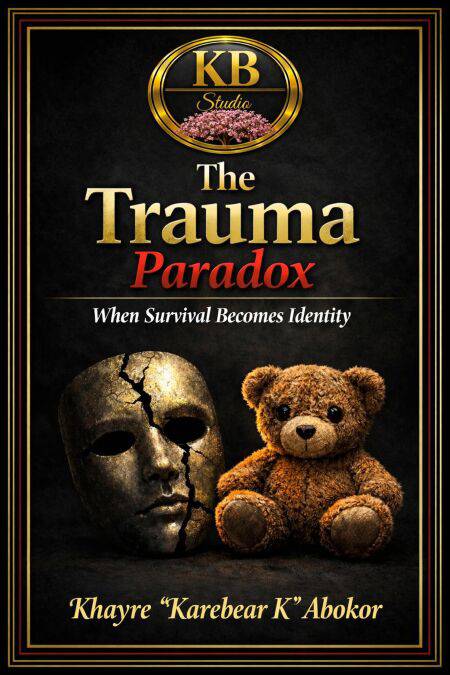
The Trauma Paradox is a manual for reclaiming the self. It explains why the human being continues to live in survival long after the danger has passed and how protective patterns slowly become identity. Trauma is not the event. Trauma is the imprint. It is the shock that stays, the nervous system hijack, the freeze that immobilizes, the shutdown that silences, and the identity distortion that convinces the survivor that adaptation is personality. This book teaches the architecture behind those patterns and the method to dismantle them.
Modern life rewards speed but punishes depth. People move forward without ever resolving what broke them. The Trauma Paradox interrupts that cycle. It reveals how the body becomes the historian of the wound, how the nervous system reacts before the mind interprets, and how survival responses become automatic scripts that shape perception, relationships, and self definition. Trauma is not weakness. It is biological intelligence that stayed active too long.
This text continues the Paradox Lineage. It is written for those who have outgrown coping and are ready to rebuild themselves from the inside out. Through twenty chapters of psychological precision, it explains the shock imprint, hypervigilance, dissociation, emotional shutdown, memory fragmentation, somatic tension, and the internal architecture that forms when survival becomes identity. Each chapter contains a primer that distills the core mechanism into a single truth, followed by deep analysis of how the pattern forms, how it maintains itself, and how it can be reversed.
The Trauma Paradox teaches that healing is not forgetting but integrating. The body must be retrained. The nervous system must be recalibrated. Safety must be reconstructed through repetition, clarity, and deliberate internal design. The book provides a blueprint for repatterning the internal system so that the survivor becomes the architect rather than the passenger. It shows how to dissolve the old survival identity and build a new internal structure grounded in regulation, presence, and self command.
This is not a book about pain. It is a manual for reclamation. It is for the reader who is tired of being defined by what happened and ready to become defined by what they build next. The Trauma Paradox transforms the wound into material for reconstruction and the survivor into the designer of their own internal world.
Specificaties
Betrokkenen
- Auteur(s):
- Uitgeverij:
Inhoud
- Taal:
- Engels
- Reeks:
Eigenschappen
- Productcode (EAN):
- 9798235662766
- Verschijningsdatum:
- 9/05/2026
- Uitvoering:
- E-book
- Formaat:
- ePub


Alleen bij Standaard Boekhandel
+ 14 punten op je klantenkaart van Standaard Boekhandel
Cadeau

AANGERADEN


Beoordelingen
We publiceren alleen reviews die voldoen aan de voorwaarden voor reviews. Bekijk onze voorwaarden voor reviews.