Standaard Boekhandel gebruikt cookies en gelijkaardige technologieën om de website goed te laten werken en je een betere surfervaring te bezorgen.
Hieronder kan je kiezen welke cookies je wilt inschakelen:
Technische en functionele cookies
Deze cookies zijn essentieel om de website goed te laten functioneren, en laten je toe om bijvoorbeeld in te loggen. Je kan deze cookies niet uitschakelen.
Analytische cookies
Deze cookies verzamelen anonieme informatie over het gebruik van onze website. Op die manier kunnen we de website beter afstemmen op de behoeften van de gebruikers.
Marketingcookies
Deze cookies delen je gedrag op onze website met externe partijen, zodat je op externe platformen relevantere advertenties van Standaard Boekhandel te zien krijgt.
Bedankt voor het vertrouwen het afgelopen jaar! Om jou te bedanken bieden we GRATIS verzending (in België) aan op alles gedurende de hele maand januari.
Afhalen na 1 uur in een winkel met voorraad
In januari gratis thuislevering in België
Ruim aanbod met 7 miljoen producten
Bedankt voor het vertrouwen het afgelopen jaar! Om jou te bedanken bieden we GRATIS verzending (in België) aan op alles gedurende de hele maand januari.
Je kan maximaal 250 producten tegelijk aan je winkelmandje toevoegen. Verwijdere enkele producten uit je winkelmandje, of splits je bestelling op in meerdere bestellingen.
In januari gratis thuislevering in België (via bpost)
Gratis levering in je Standaard Boekhandel
Omschrijving
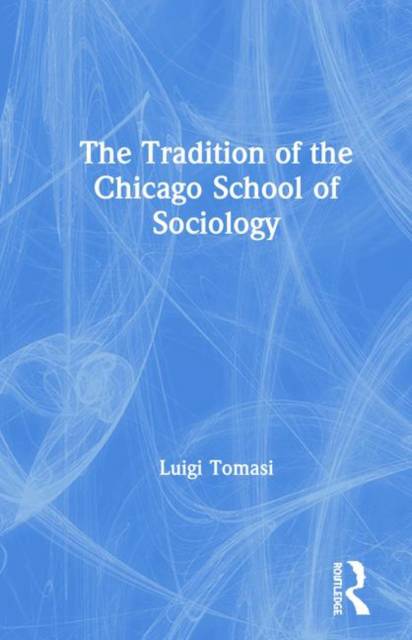
The value of the book lies in its reassessment of the distinctive features of the Chicago School, of its contributions in the theoretical and methodological fields and of its influence on the growth of sociology throughout the world and in America in particular. The book pays particularly close attention to the eclectic nature of the research methods used by the Chicago sociologists as they sought to integrate subjective and objective aspects of human life. It demonstrates that this eclecticism formed an integral part of their theories but also emphasises that empirical observation, too, was important, although not as an end in itself. While, for example, they were working on the concepts of organization, marginality and interaction, they did not consider these as ends in themselves but as additions to the development of a more general theoretical approach. Often in the past, and wrongly, Chicago's theoretical contribution has been restricted to the urban sector. The book clearly and unequivocally reveals how the tendency to see the Chicago School as a 'theoretical' is the result of misinterpretation and of a failure to realize that, for the sociologists of the period, understanding the social dynamics of the city of Chicago was tantamount to interpreting the central tendencies of modern society itself. The book analyzes how empirical observation was important but not an end in itself. The Chicago School developed a profusion of sociological theories in many areas of inquiry and never opted for any one particular approach. The various essays in the book also make it clear that the School decisively contributed to the development of qualitative and quantitative techniques.