


- Afhalen na 1 uur in een winkel met voorraad
- Gratis thuislevering in België vanaf € 30
- Ruim aanbod met 7 miljoen producten
- Afhalen na 1 uur in een winkel met voorraad
- Gratis thuislevering in België vanaf € 30
- Ruim aanbod met 7 miljoen producten





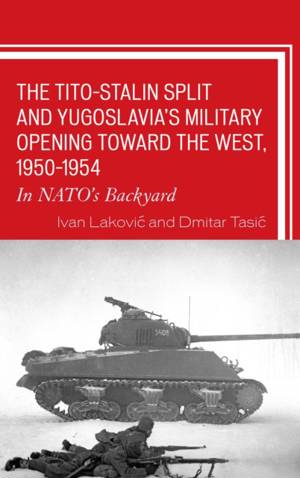
The Tito-Stalin Split and Yugoslavia's Military Opening Toward the West, 1950-1954
In Nato's Backyard
Ivan Lakovic, Dmitar Tasic
€ 220,45
+ 440 punten
Omschrijving
Yugoslav military cooperation with West emerged after the country's split with the U.S.S.R. and its allies in 1948. It came as a surprise for many, since Yugoslavia used to be one of the staunchest followers of Soviet politics. However, faced with possible military escalation of the ideological, political, and economic worsening of relations with the East, the Yugoslav leadership quickly turned to their former "class enemies." For the United States, it presented an opportunity to acquire many unexpected political benefits. Yugoslav alienation from the Kremlin provided territorial consolidation of the southern flank of NATO, denial of direct approach to the Adriatic Sea and Northern Italy to Soviet troops, and dealt a strong political blow to the homogeneity of the Eastern bloc. While not insisting on changing the ideological nature of Yugoslav state, the United States provided much needed material and financial aid, developing the base for entering into sphere of military cooperation. It had two main categories--direct support for Yugoslav forces through shipments of military equipment, as well as Yugoslavia entering into defensive, military alliance (the Balkan Pact) with Greece and Turkey, already full members of NATO. Such trends, aiming towards closer Yugoslav bonding with Western military and political structures, ended in the mid-1950s with Stalin's death, the outbreak of the Trieste crisis, and Tito's reconciliation with Soviet leadership. Developing the new policy of non-alignment with either of the confronting blocs, Yugoslavia stepped out from the program of Western military aid, while the Balkan Pact slowly faded in growing animosity between Greece and Turkey.
Specificaties
Betrokkenen
- Auteur(s):
- Uitgeverij:
Inhoud
- Aantal bladzijden:
- 300
- Taal:
- Engels
- Reeks:
Eigenschappen
- Productcode (EAN):
- 9781498539333
- Verschijningsdatum:
- 14/07/2016
- Uitvoering:
- Hardcover
- Formaat:
- Genaaid
- Afmetingen:
- 155 mm x 231 mm
- Gewicht:
- 635 g


Alleen bij Standaard Boekhandel
+ 440 punten op je klantenkaart van Standaard Boekhandel
Cadeau

AANGERADEN


Beoordelingen
We publiceren alleen reviews die voldoen aan de voorwaarden voor reviews. Bekijk onze voorwaarden voor reviews.